
How AI is Revolutionizing Personalized Healthcare
Artificial Intelligence (AI) is revolutionizing personalized healthcare by leveraging data and technology to provide tailored treatment plans for individuals. AI algorithms can analyze vast amounts of patient data, including genetic information, medical history, and lifestyle factors, to identify patterns and predict outcomes.
By utilizing machine learning and predictive analytics, AI can help healthcare providers make more informed decisions about diagnosis, treatment options, and preventive measures. This personalized approach allows for targeted interventions that are more effective and efficient, ultimately improving patient outcomes.
Furthermore, AI-powered tools can assist in remote monitoring of patients, enabling continuous tracking of health metrics and early detection of potential issues. This proactive approach to healthcare can lead to timely interventions and better management of chronic conditions.
In conclusion, AI is transforming personalized healthcare by enabling precision medicine, enhancing decision-making processes, and improving patient engagement. As technology continues to advance, the role of AI in healthcare is only expected to grow, offering new possibilities for personalized treatment and improved health outcomes.
The Impact of Artificial Intelligence on Tailored Medical Treatments
Artificial Intelligence (AI) has revolutionized the field of personalized healthcare by enabling tailored medical treatments for individuals. The impact of AI on personalized medicine is profound, as it allows healthcare providers to analyze vast amounts of data to create customized treatment plans based on a patient’s unique genetic makeup, lifestyle, and medical history.
AI algorithms can process complex genetic information to identify potential risks for certain diseases, predict treatment outcomes, and suggest personalized interventions. This level of precision in diagnosis and treatment not only improves patient outcomes but also reduces healthcare costs by minimizing trial-and-error approaches.
Furthermore, AI-powered tools can continuously monitor a patient’s health status, adjust treatment plans in real-time, and provide personalized recommendations for lifestyle changes. This proactive approach to healthcare management can help prevent diseases before they progress and lead to better overall health outcomes for individuals.
Enhancing Patient Care through AI-driven Personalized Healthcare
AI-driven personalized healthcare has revolutionized the way patient care is delivered, providing tailored treatment plans and interventions based on individual characteristics and needs. By leveraging AI technologies, healthcare providers can analyze vast amounts of data to predict disease risk, optimize treatment outcomes, and improve overall patient experience.
Some key ways in which AI enhances patient care in personalized healthcare include:
- Early disease detection: AI algorithms can analyze patient data to identify patterns and detect diseases at an early stage, allowing for timely intervention and treatment.
- Precision medicine: AI can help healthcare providers develop personalized treatment plans based on a patient’s genetic makeup, lifestyle factors, and medical history, leading to more effective and targeted therapies.
- Remote monitoring: AI-powered devices and sensors enable remote monitoring of patients, allowing healthcare providers to track vital signs, medication adherence, and overall health status in real-time.
- Improved patient engagement: AI-driven chatbots and virtual assistants can provide patients with personalized health information, reminders, and support, enhancing patient engagement and adherence to treatment plans.
Overall, AI-driven personalized healthcare holds great promise in improving patient outcomes, reducing healthcare costs, and transforming the way healthcare is delivered in the future.
The Future of Medicine: AI’s Role in Customized Healthcare
Artificial Intelligence (AI) is revolutionizing the field of medicine, particularly in the realm of personalized healthcare. By harnessing the power of AI, healthcare providers are able to tailor treatment plans and interventions to meet the unique needs of each individual patient. This customized approach to healthcare has the potential to improve patient outcomes, reduce healthcare costs, and enhance overall quality of care.
AI algorithms can analyze vast amounts of data, including genetic information, medical history, lifestyle factors, and more, to identify patterns and trends that can inform personalized treatment plans. By leveraging this data-driven approach, healthcare providers can make more informed decisions about diagnosis, treatment options, and preventative measures.
Furthermore, AI can help streamline administrative processes, such as scheduling appointments, managing electronic health records, and coordinating care among multiple providers. This not only improves efficiency within healthcare systems but also frees up healthcare professionals to focus more on patient care.
Overall, the future of medicine is increasingly reliant on AI to deliver personalized healthcare that is tailored to the unique needs of each individual patient. As technology continues to advance, we can expect AI to play an even greater role in shaping the future of healthcare delivery and improving patient outcomes.
Utilizing AI to Improve Individualized Health Management
Utilizing artificial intelligence (AI) in personalized healthcare has revolutionized the way individuals manage their health. AI technology has the capability to analyze vast amounts of data and provide tailored recommendations for each individual’s unique health needs. Here are some ways AI is being used to improve individualized health management:
- Personalized Treatment Plans: AI algorithms can analyze a patient’s medical history, genetic information, and lifestyle factors to create personalized treatment plans that are more effective and efficient.
- Remote Monitoring: AI-powered devices can track vital signs and other health metrics in real-time, allowing healthcare providers to monitor patients remotely and intervene when necessary.
- Predictive Analytics: AI can predict potential health issues based on a person’s data, enabling early intervention and prevention of diseases before they escalate.
- Behavioral Analysis: AI can analyze an individual’s behavior patterns to identify unhealthy habits and provide personalized recommendations for improving overall health and wellness.

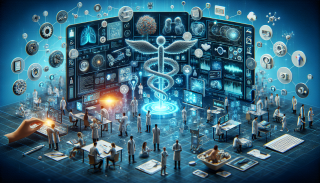


I have personally experienced the benefits of AI in personalized healthcare. It helped me receive more accurate diagnoses and treatment plans tailored to my specific needs. I am curious to learn more about the ethical considerations surrounding AI in healthcare and how data privacy is maintained.
AI has revolutionized the way healthcare is delivered. As someone who works in the tech industry, I find the advancements in personalized healthcare fascinating. I wonder how AI can be further integrated into patient care to improve outcomes and reduce costs.
I have a family member who benefited greatly from AI-driven personalized healthcare. It provided them with early detection of a serious condition, ultimately saving their life. I would like to know more about the training data used for AI algorithms in healthcare.
The role of AI in personalized healthcare is crucial for advancing patient care. I have seen firsthand how AI can analyze vast amounts of data to predict health outcomes and recommend personalized treatment plans. How do healthcare providers ensure the accuracy and reliability of AI algorithms in practice?
As a healthcare professional, I have seen firsthand the impact of AI in personalized healthcare. The ability of AI to analyze vast amounts of data quickly and accurately has revolutionized the way we diagnose and treat patients. I believe that AI will continue to play a crucial role in improving patient outcomes and reducing healthcare costs in the future.
I have been using AI-powered health apps to track my fitness and monitor my health for the past year. The personalized recommendations and insights provided by these apps have helped me make better lifestyle choices and improve my overall well-being. I am excited to see how AI will further enhance personalized healthcare in the coming years.
I recently underwent a personalized treatment plan developed with the help of AI algorithms. The tailored approach based on my genetic makeup and medical history resulted in a faster recovery and better outcomes. I am grateful for the advancements in AI technology that have made such personalized healthcare solutions possible.
I have always been interested in the intersection of technology and healthcare, and AI in personalized healthcare is a perfect example of this synergy. The potential for AI to individualize treatment plans and predict health outcomes is truly remarkable. I look forward to seeing how AI continues to transform the healthcare industry for the better.