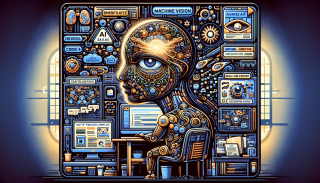
The Evolution of Machine Vision: A Historical Perspective
Machine vision has undergone a remarkable transformation since its inception. Initially, the technology was limited to simple tasks such as basic object detection and recognition. The early systems were cumbersome, relying heavily on specialized hardware and lacking the flexibility seen in today’s applications. However, as computational power increased and algorithms evolved, so did the capabilities of machine vision systems.
In the 1980s, advancements in digital image processing began to pave the way for more complex machine vision tasks. Researchers and engineers developed new techniques for image analysis, enabling systems to perform more sophisticated functions like pattern recognition and feature extraction. This period marked a significant leap forward, laying the groundwork for the integration of machine vision into various industries.
The 1990s saw further progress with the introduction of more powerful microprocessors and improved camera technologies. These enhancements allowed for real-time image processing, making machine vision more practical and applicable in diverse fields such as manufacturing, robotics, and medical imaging. The ability to process images in real-time opened up new possibilities for automation and quality control, revolutionizing industries and driving efficiency.
As the new millennium approached, artificial intelligence (AI) began to play a crucial role in the evolution of machine vision. Machine learning algorithms, particularly those involving neural networks, started to enhance the accuracy and versatility of vision systems. AI-driven approaches enabled machines to learn from data, improving their performance over time and allowing for more complex and dynamic tasks to be accomplished.
In recent years, the convergence of machine vision and AI has led to unprecedented advancements. Deep learning, a subset of machine learning, has been particularly influential. By leveraging vast amounts of data, deep learning models can achieve remarkable accuracy in tasks such as image classification, object detection, and facial recognition. This powerful combination has propelled machine vision into new realms, including autonomous vehicles, advanced robotics, and intelligent surveillance systems.
Today, machine vision technology continues to evolve at a rapid pace. Innovations in AI, coupled with advancements in hardware such as GPUs and specialized processors, are pushing the boundaries of what is possible. The integration of machine vision with other emerging technologies, like the Internet of Things (IoT) and edge computing, is further expanding its applications and impact across various sectors.
In summary, the evolution of machine vision from simple object detection systems to sophisticated AI-driven technologies highlights the significant strides made over the past few decades. The continuous improvements in computational power, algorithmic sophistication, and hardware capabilities have collectively contributed to the remarkable advancements seen today. As machine vision continues to integrate with AI and other cutting-edge technologies, its potential to revolutionize industries and improve lives remains boundless.
How AI is Revolutionizing Machine Vision Capabilities
Artificial intelligence (AI) is transforming machine vision capabilities, offering unprecedented precision and efficiency. Leveraging advanced algorithms, AI can process and interpret vast amounts of visual data, enabling machines to perform tasks once deemed impossible. This integration significantly enhances object recognition, defect detection, and pattern analysis, making it invaluable in various industries.
AI-driven machine vision systems utilize deep learning models to identify and classify objects with remarkable accuracy. These systems can learn from vast datasets, continuously improving their performance over time. The ability to adapt and refine their understanding allows AI to handle complex visual tasks, surpassing traditional vision systems in both speed and accuracy.
Moreover, AI enhances machine vision by enabling real-time processing and decision-making. This capability is crucial in applications such as autonomous vehicles, where split-second decisions can mean the difference between success and failure. By processing visual information instantaneously, AI-powered systems ensure higher safety and reliability standards.
Another significant advantage of AI in machine vision is its ability to work in diverse environments. Traditional systems often struggle with varying lighting conditions, occlusions, and background noise. However, AI algorithms can adapt to these challenges, maintaining high performance regardless of the external conditions. This adaptability makes AI-driven vision systems suitable for a wide range of applications, from manufacturing to healthcare.
AI’s impact on machine vision extends beyond just recognition and analysis. Predictive maintenance is another area where AI proves invaluable. By analyzing visual data from machinery, AI systems can predict potential failures before they occur, reducing downtime and maintenance costs. This proactive approach ensures smoother operations and extends the lifespan of equipment.
Furthermore, AI integration in machine vision facilitates seamless automation. Robots equipped with AI-powered vision can perform intricate tasks with minimal human intervention. This capability not only increases productivity but also reduces human error, ensuring higher quality outcomes in production lines.
In summary, AI is revolutionizing machine vision by offering enhanced precision, real-time processing, adaptability, predictive maintenance, and seamless automation. These advancements are driving significant improvements across various sectors, making AI an indispensable tool in the evolution of machine vision technology.
Applications of Machine Vision in Various Industries
Machine vision technology, tightly integrated with artificial intelligence, has revolutionized numerous industries, leveraging its potential to enhance efficiency and accuracy. This advancement offers a myriad of applications that are transforming traditional methods into automated, precision-driven processes.
In the manufacturing sector, machine vision systems are pivotal in quality control, ensuring products meet stringent standards by detecting defects and deviations. These systems enhance productivity by automating inspections and reducing human error. Additionally, robotic guidance powered by machine vision improves assembly line precision, optimizing operational workflows.
The automotive industry also reaps significant benefits. Automated visual inspection systems scrutinize components for defects, enhancing vehicle safety and reliability. Machine vision aids in the automation of assembly processes, ensuring parts are correctly aligned and assembled, thus reducing costly recalls.
In healthcare, machine vision is indispensable. It enables precise diagnosis through image analysis, supports surgical procedures by providing real-time visuals, and assists in patient monitoring. These applications enhance diagnostic accuracy, improve surgical outcomes, and streamline patient care management.
Retail and e-commerce sectors utilize machine vision for inventory management and customer experience enhancement. Automated systems track inventory levels, reducing stockouts and overstock situations. Face recognition technology personalizes shopping experiences, offering tailored recommendations based on customer preferences and behaviors.
The agriculture industry benefits from machine vision through crop monitoring and sorting. Automated systems analyze crop health, detect diseases, and classify produce, ensuring only the best quality products reach the market. This technology increases yield efficiency and reduces waste.
Machine vision also plays a crucial role in the pharmaceutical sector. It ensures the integrity of drugs by inspecting packaging for tampering and verifying label accuracy. Automated systems enhance the precision of dosage forms and streamline production processes, maintaining stringent compliance with regulatory standards.
In the realm of security, machine vision enhances surveillance systems. These systems can detect and analyze unusual activities, providing real-time alerts for potential threats. This technology is instrumental in safeguarding assets and ensuring public safety.
Across various industries, the amalgamation of machine vision technology with artificial intelligence is driving unprecedented advancements. This integration not only boosts operational efficiency but also enhances the quality and reliability of products and services, establishing a new paradigm of technological innovation.
The Role of Deep Learning in Enhancing Image Recognition
Deep learning has revolutionized image recognition, significantly advancing the field of machine vision technology. By leveraging neural networks, deep learning models can process vast amounts of data, enabling accurate identification and classification of objects within images. This technology is pivotal in applications like autonomous vehicles, medical diagnostics, and security systems.
The integration of deep learning algorithms has enhanced the precision of image recognition tasks. Convolutional Neural Networks (CNNs), a type of deep learning architecture, are particularly effective for this purpose. CNNs can automatically learn features from raw image data, which eliminates the need for manual feature extraction. This capability allows for more nuanced and detailed image analysis, improving both speed and accuracy.
Moreover, deep learning models can be trained on diverse datasets, allowing them to generalize well to new, unseen images. This adaptability is crucial in dynamic environments where conditions and objects can vary widely. For instance, in autonomous driving, the ability to recognize pedestrians, vehicles, and traffic signs in real-time, under different lighting and weather conditions, is essential for safety and efficiency.
Another significant advantage of deep learning in image recognition is its scalability. With the availability of large datasets and powerful computational resources, deep learning models can be scaled to handle complex image recognition tasks. This scalability is vital for applications such as facial recognition in large crowds or analyzing high-resolution medical images for early disease detection.
The role of deep learning in image recognition extends to various industries, each benefiting from its enhanced capabilities. In healthcare, deep learning algorithms assist in the detection of anomalies in medical images, enabling early diagnosis and treatment. In retail, image recognition powered by deep learning enhances inventory management and customer experience through automated product identification and recommendation systems.
Furthermore, continuous advancements in deep learning techniques, such as Generative Adversarial Networks (GANs) and transfer learning, are pushing the boundaries of what image recognition can achieve. GANs, for example, can generate highly realistic images, which can be used to augment training datasets, improving model performance. Transfer learning allows models to leverage pre-trained networks, reducing the need for extensive computational resources and time.
In conclusion, deep learning has substantially improved image recognition, making it more accurate, scalable, and adaptable. Its integration into machine vision technology offers numerous benefits across different sectors, driving innovation and efficiency. As deep learning algorithms continue to evolve, their impact on image recognition and machine vision will only grow, paving the way for more advanced and intelligent systems.
Challenges and Solutions in Machine Vision and AI Integration
Integrating machine vision technology with artificial intelligence (AI) presents numerous challenges and solutions. Both fields have made significant strides, yet their amalgamation remains complex. The primary hurdles in this integration include data quality, computational power, and system adaptability.
- Data Quality: High-quality data is critical for machine vision and AI. Images need precise labeling, and inaccuracies can lead to flawed algorithms. Ensuring data consistency is paramount.
- Computational Power: Machine vision and AI require significant processing power. Advanced GPUs and cloud computing solutions help meet these demands, enabling faster and more efficient computations.
- System Adaptability: Systems must adapt to varied environments and conditions. AI models should be trained on diverse datasets to handle real-world scenarios effectively.
Addressing these challenges involves several innovative solutions:
- Enhanced Data Labeling: Leveraging automated tools for data annotation can improve accuracy and speed. Crowdsourcing can also be an effective strategy for obtaining high-quality labeled data.
- Advanced Hardware: Utilizing cutting-edge hardware such as specialized AI chips and high-performance GPUs can significantly boost computational capabilities, making real-time processing feasible.
- Robust Training: Employing transfer learning and reinforcement learning techniques enhances model robustness. These methods help AI systems generalize better across different tasks and environments.
The fusion of machine vision and AI holds immense potential. By overcoming these challenges with innovative solutions, industries can harness the power of these technologies to achieve unprecedented levels of automation and efficiency. The continuous evolution in this domain promises a future where machine vision and AI integration become seamless, driving forward technological advancements and operational excellence.
Future Trends in Machine Vision and Artificial Intelligence
Machine vision technology and artificial intelligence (AI) are undergoing rapid advancements, shaping numerous industries with innovative solutions. The synergy between machine vision and AI promises a future rich with transformative trends and applications.
One of the most promising trends is the integration of deep learning algorithms into machine vision systems. These algorithms enhance image recognition capabilities, enabling systems to identify objects and patterns with unprecedented accuracy. This advancement is crucial for industries such as autonomous vehicles, where precise environment perception is paramount.
Another emerging trend is the use of edge computing in machine vision applications. By processing data locally on edge devices, latency is significantly reduced, and real-time decision-making is enhanced. This is particularly beneficial for applications requiring immediate responses, such as industrial automation and robotics.
AI-powered predictive maintenance is also gaining traction. Machine vision systems equipped with AI can monitor equipment in real-time, predicting failures and scheduling maintenance before breakdowns occur. This proactive approach minimizes downtime and extends the lifespan of machinery.
Additionally, the adoption of 3D imaging and LiDAR technology is revolutionizing sectors like healthcare and manufacturing. These technologies provide detailed spatial information, facilitating tasks such as quality control in manufacturing and advanced diagnostics in healthcare.
Furthermore, advances in natural language processing (NLP) are improving human-machine interactions. Machine vision systems integrated with NLP can interpret and respond to verbal commands, enhancing user experience in applications like smart homes and customer service.
The ethical use of AI and machine vision is also becoming a focal point. Ensuring data privacy and addressing biases in AI models are critical challenges being actively addressed by researchers and developers.
In conclusion, the future of machine vision and AI is brimming with potential. From deep learning and edge computing to predictive maintenance and 3D imaging, these technologies are set to revolutionize a myriad of industries, driving efficiency and innovation.
Case Studies: Successful Implementations of Machine Vision and AI
Machine vision technology integrated with artificial intelligence (AI) has revolutionized various industries, leading to remarkable outcomes. These implementations showcase how advanced systems enhance operations, improve accuracy, and optimize efficiency across different sectors. Below are detailed case studies highlighting the successful deployment of machine vision and AI integration.
- Automotive Industry: The integration of machine vision and AI in the automotive sector has significantly improved assembly line efficiency and quality assurance. AI-powered vision systems detect minute defects in components, ensuring high-quality production. For example, a major car manufacturer achieved a 30% reduction in production errors, leading to substantial cost savings and enhanced consumer satisfaction.
- Healthcare: In healthcare, machine vision and AI are employed for diagnostic purposes. One notable instance is the use of AI-driven imaging systems to analyze medical scans. These systems identify anomalies with a precision surpassing human capabilities. A leading hospital implemented this technology, resulting in earlier detection of diseases and improved patient outcomes by 20%.
- Manufacturing: In the manufacturing domain, AI-integrated machine vision systems are pivotal for quality control. They inspect products at various stages of production, ensuring adherence to stringent standards. A renowned electronics manufacturer reported a 25% increase in production efficiency and a 15% reduction in waste after adopting these advanced systems.
- Retail: Retailers utilize AI and machine vision for inventory management and enhancing the shopping experience. Automated systems track inventory levels and predict stock requirements, reducing shortages and overstock situations. A leading retail chain saw a 20% improvement in inventory turnover and a 10% boost in sales after implementing these technologies.
- Agriculture: Machine vision and AI are transforming agriculture by enabling precision farming. Drones equipped with vision systems monitor crop health, soil quality, and irrigation needs. A prominent agricultural company reported a 15% increase in crop yield and a 10% reduction in resource usage due to these technologies.
These case studies exemplify how the fusion of machine vision technology and AI leads to transformative outcomes across diverse industries. By implementing these advanced systems, organizations achieve enhanced precision, efficiency, and cost-effectiveness, ultimately driving innovation and growth.