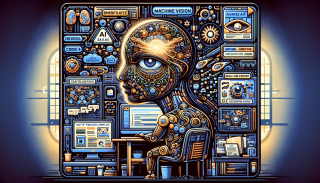
Understanding the Core Innovations in Machine Vision
Machine vision technology has undergone significant advancements, revolutionizing various industries. These innovations enhance the ability of machines to interpret and understand visual data, leading to improved automation and efficiency. The core innovations in machine vision can be categorized into several key areas, each contributing to the overall enhancement of this technology.
- Deep Learning Algorithms: The integration of deep learning algorithms has significantly improved the accuracy and capability of machine vision systems. These algorithms enable machines to learn from vast amounts of data, enhancing their ability to recognize patterns and make decisions.
- High-Resolution Imaging: Advances in sensor technology have led to the development of high-resolution cameras. These cameras capture detailed images, allowing for more precise analysis and interpretation of visual data.
- 3D Vision Systems: The introduction of 3D vision systems has transformed machine vision by providing depth perception. This innovation is crucial for applications requiring spatial awareness, such as robotics and autonomous vehicles.
- Edge Computing: Edge computing has brought processing power closer to the source of data. This reduces latency and enhances the real-time processing capabilities of machine vision systems, making them more efficient and responsive.
- Enhanced Image Processing: Improved image processing techniques, including advanced filtering and noise reduction, have increased the clarity and quality of visual data. This enhancement is vital for accurate analysis and decision-making.
- AI-Powered Analytics: The integration of artificial intelligence (AI) with machine vision has enabled more sophisticated analytics. AI algorithms can analyze complex visual data, providing deeper insights and enabling predictive maintenance and quality control.
- Integration with IoT: The synergy between machine vision and the Internet of Things (IoT) has opened new possibilities for automation. IoT devices equipped with vision capabilities can monitor and control processes in real-time, enhancing operational efficiency.
- Robust Software Platforms: The development of robust software platforms has streamlined the deployment and management of machine vision systems. These platforms offer user-friendly interfaces and powerful tools for customization and integration.
These core innovations in machine vision technology are driving the future of automation and intelligent systems. By leveraging deep learning, high-resolution imaging, 3D vision, edge computing, enhanced image processing, AI-powered analytics, IoT integration, and robust software platforms, industries can achieve unprecedented levels of efficiency and accuracy. As machine vision continues to evolve, its applications will expand, further transforming the landscape of modern technology.
How Machine Vision is Transforming Industries
Machine vision technology is revolutionizing various industries by enhancing efficiency, accuracy, and productivity. This advanced technology leverages artificial intelligence and sophisticated algorithms to enable machines to interpret and understand visual data. The integration of machine vision systems is transforming sectors such as manufacturing, healthcare, agriculture, and retail.
In the manufacturing industry, machine vision systems are employed for quality control, ensuring that products meet stringent standards. These systems can detect defects, measure components, and verify assembly processes with unparalleled precision. By automating inspection tasks, manufacturers can reduce human error, increase throughput, and lower operational costs.
In the healthcare sector, machine vision is used for medical imaging and diagnostics. Advanced imaging techniques, powered by machine vision, assist in early detection of diseases, improving patient outcomes. For instance, machine vision algorithms can analyze medical images to identify anomalies, such as tumors, with high accuracy, aiding radiologists in making informed decisions.
Agriculture is another industry benefiting from machine vision technology. Precision agriculture utilizes machine vision to monitor crop health, detect pests, and optimize harvesting processes. By analyzing images of crops, farmers can make data-driven decisions to enhance yield and reduce resource wastage. This technology also enables automated machinery to perform tasks such as planting and weeding with minimal human intervention.
In the retail sector, machine vision is transforming the shopping experience. Retailers use this technology for inventory management, ensuring shelves are stocked and products are correctly placed. Machine vision systems can also enhance security by monitoring store activities and identifying suspicious behavior. Additionally, these systems enable personalized marketing by analyzing customer preferences and behaviors.
Overall, the adoption of machine vision technology across various industries is driving significant advancements. By automating complex tasks and providing accurate data analysis, machine vision is paving the way for smarter, more efficient operations. As this technology continues to evolve, its impact on industries will only grow, leading to further innovations and improvements in productivity.
The Role of AI in Advancing Machine Vision Technology
Artificial Intelligence (AI) has become a pivotal force in the evolution of machine vision technology. By integrating AI algorithms, machine vision systems can now perform complex tasks with unprecedented accuracy and speed. This synergy between AI and machine vision is revolutionizing various industries, from manufacturing to healthcare.
One of the primary benefits of AI in machine vision is enhanced image recognition. AI-powered systems can identify and classify objects within images with remarkable precision. This capability is crucial for applications such as quality control in manufacturing, where detecting defects in products is essential. Additionally, AI algorithms can adapt and improve over time, leading to continuous advancements in machine vision performance.
Another significant advantage is the ability to process vast amounts of data quickly. Traditional machine vision systems often struggle with large datasets, but AI can analyze and interpret data at an accelerated pace. This efficiency is particularly beneficial in fields like autonomous vehicles, where real-time image processing is critical for safe navigation.
AI also enables machine vision systems to perform tasks that were previously impossible. For instance, AI can facilitate facial recognition, enabling security systems to identify individuals with high accuracy. In the medical field, AI-driven machine vision can assist in diagnosing diseases by analyzing medical images, leading to early detection and improved patient outcomes.
Moreover, AI enhances the flexibility of machine vision systems. Traditional systems are often limited by predefined rules and parameters. In contrast, AI can learn from new data and adapt to changing conditions, making machine vision more versatile and robust. This adaptability is essential for applications in dynamic environments, such as robotics and automated inspection systems.
In conclusion, the integration of AI in machine vision technology is driving significant advancements across various sectors. Enhanced image recognition, rapid data processing, and the ability to perform complex tasks are just a few of the benefits AI brings to machine vision. As AI continues to evolve, its impact on machine vision technology will undoubtedly grow, leading to even more innovative applications and solutions.
Key Breakthroughs in Image Processing and Analysis
Recent advancements in machine vision technology have revolutionized image processing and analysis, enabling unprecedented accuracy and efficiency. These breakthroughs are transforming industries by enhancing capabilities in object detection, pattern recognition, and image segmentation. The integration of artificial intelligence and deep learning algorithms has significantly improved the performance of image processing systems, making them more robust and adaptable to various applications.
One of the key innovations is the development of convolutional neural networks (CNNs). These networks have dramatically improved the ability to identify and classify objects within images. By mimicking the human visual cortex, CNNs can process visual data with remarkable precision, making them indispensable in fields such as medical imaging, autonomous vehicles, and facial recognition.
Another significant advancement is the use of generative adversarial networks (GANs). GANs consist of two neural networks that compete against each other to generate highly realistic images. This technology is particularly useful in enhancing image quality, creating synthetic data for training purposes, and even in artistic applications where generating new visual content is required.
Image segmentation has also seen substantial progress with the advent of advanced algorithms. Techniques such as U-Net and Mask R-CNN have enabled more accurate delineation of objects within an image, which is crucial for applications in medical diagnostics, satellite imagery, and automated inspection systems. These methods allow for precise identification and isolation of regions of interest, facilitating detailed analysis and decision-making.
Furthermore, the implementation of edge computing in image processing has brought about significant improvements in real-time analysis. By processing data closer to the source, edge computing reduces latency and bandwidth usage, making it ideal for applications that require immediate feedback, such as surveillance systems and industrial automation.
In addition, the integration of machine learning with traditional image processing techniques has led to the development of hybrid models. These models leverage the strengths of both approaches, resulting in more efficient and accurate image analysis. For instance, combining machine learning algorithms with classical methods like histogram equalization and edge detection can enhance image quality and feature extraction.
Overall, these key breakthroughs in image processing and analysis are driving the evolution of machine vision technology. As these innovations continue to advance, they will undoubtedly unlock new possibilities and applications across various sectors, further solidifying the importance of machine vision in the modern world.
Machine Vision: From Concept to Real-World Applications
Machine vision technology has evolved from a theoretical concept to a cornerstone of modern industry, driving innovation across various sectors. This transformation is underpinned by advancements in artificial intelligence, deep learning, and sophisticated imaging techniques. These technologies enable machines to interpret and understand visual data, leading to enhanced automation and efficiency.
Initially, machine vision was limited to basic image processing tasks. However, recent developments have expanded its capabilities significantly. Modern systems can now perform complex functions such as object recognition, defect detection, and quality assurance with remarkable accuracy. This leap in functionality is largely due to the integration of AI algorithms that mimic human visual perception.
One of the most significant applications of machine vision is in the manufacturing industry. Automated inspection systems utilize high-resolution cameras and advanced software to identify defects in products, ensuring high-quality standards. This not only reduces human error but also accelerates the production process, leading to increased productivity.
In the realm of autonomous vehicles, machine vision plays a crucial role. Self-driving cars rely on a network of cameras and sensors to navigate and make real-time decisions. These systems analyze the environment, detect obstacles, and interpret traffic signals, ensuring safe and efficient transportation.
Healthcare is another sector benefiting from machine vision advancements. Medical imaging systems equipped with machine vision can detect anomalies in X-rays, MRIs, and CT scans with high precision. This aids in early diagnosis and treatment, improving patient outcomes.
Moreover, machine vision is revolutionizing the retail industry. Smart checkout systems use visual recognition to identify products and streamline the payment process, enhancing the shopping experience. Additionally, inventory management systems employ machine vision to monitor stock levels and optimize supply chains.
In agriculture, machine vision technology is used for crop monitoring and management. Drones equipped with high-resolution cameras capture images of fields, which are then analyzed to assess crop health, detect pests, and optimize irrigation. This leads to more efficient farming practices and higher yields.
Security and surveillance systems also leverage machine vision for enhanced monitoring. Advanced cameras and software can detect unusual activities, recognize faces, and even predict potential security threats. This ensures a higher level of safety and security in various environments.
Overall, the journey of machine vision from a conceptual framework to real-world applications is a testament to the power of technological innovation. As machine vision continues to evolve, its impact on industries will only grow, driving further advancements and efficiencies.
Challenges and Solutions in Modern Machine Vision Systems
Modern machine vision systems face numerous challenges, but innovative solutions are continually emerging to address these issues. One of the primary obstacles is the complexity of image processing. High-resolution images require substantial computational power, which can lead to increased latency and reduced efficiency. To mitigate this, advanced algorithms and optimized hardware are being developed to enhance processing speed and accuracy.
Another significant challenge is the variability in lighting conditions. Inconsistent lighting can drastically affect image quality, making it difficult for machine vision systems to accurately interpret visual data. Adaptive lighting techniques and sophisticated image enhancement algorithms are being employed to overcome this hurdle, ensuring consistent performance across diverse environments.
Object recognition and classification also present considerable difficulties. The diversity of objects and their varying orientations can complicate the recognition process. Machine learning and deep learning models are being leveraged to improve the accuracy and reliability of object detection and classification. These models are trained on extensive datasets, enabling them to recognize a wide array of objects with high precision.
Additionally, the integration of machine vision systems with other technologies poses a challenge. Seamless integration is crucial for the effective deployment of these systems in real-world applications. Interoperability standards and robust communication protocols are being developed to facilitate the smooth integration of machine vision systems with other industrial and consumer technologies.
Data security and privacy are also critical concerns. The vast amount of visual data captured by machine vision systems can be sensitive, necessitating stringent security measures. Encryption techniques and secure data storage solutions are being implemented to protect this data from unauthorized access and breaches.
Lastly, the cost of implementing advanced machine vision systems can be prohibitive. The development and deployment of these systems require significant investment in both hardware and software. However, the advent of cost-effective components and open-source software solutions is making machine vision technology more accessible to a broader range of industries.
In summary, while modern machine vision systems encounter several challenges, ongoing advancements in technology are providing effective solutions. Enhanced algorithms, adaptive lighting, machine learning models, interoperability standards, data security measures, and cost-effective solutions are collectively driving the evolution of machine vision technology, ensuring its continued growth and application across various sectors.
Future Trends and Predictions for Machine Vision Technology
Machine vision technology is rapidly evolving, driven by advancements in artificial intelligence, deep learning, and sensor technology. These innovations are paving the way for future trends that promise to revolutionize various industries. The integration of machine vision with AI is enabling more accurate and efficient image recognition, which is crucial for applications in manufacturing, healthcare, and autonomous vehicles.
One significant trend is the increasing use of deep learning algorithms. These algorithms enhance the ability of machine vision systems to identify and classify objects with high precision. This is particularly beneficial in quality control processes, where detecting minute defects is essential. Additionally, the adoption of edge computing is gaining momentum. By processing data closer to the source, edge computing reduces latency and improves real-time decision-making capabilities.
Another emerging trend is the development of 3D vision systems. Unlike traditional 2D systems, 3D vision provides a more comprehensive analysis of objects, including their shape, size, and volume. This is especially useful in robotics and automation, where precise object manipulation is required. Furthermore, the integration of hyperspectral imaging is expanding the scope of machine vision. Hyperspectral imaging captures a wide spectrum of light, allowing for the detection of materials and substances that are invisible to the naked eye.
The future of machine vision also includes advancements in sensor technology. High-resolution sensors are becoming more affordable and accessible, enabling the capture of finer details in images. This is crucial for applications in medical imaging and scientific research. Moreover, the use of collaborative robots, or cobots, is on the rise. Cobots equipped with machine vision can work alongside humans, enhancing productivity and safety in various work environments.
In addition to these trends, the integration of machine vision with the Internet of Things (IoT) is creating new opportunities. IoT-enabled machine vision systems can collect and analyze vast amounts of data, providing valuable insights for predictive maintenance and operational efficiency. This synergy between machine vision and IoT is expected to drive significant advancements in smart manufacturing and smart cities.
Overall, the future of machine vision technology is promising, with continuous innovations leading to more sophisticated and versatile applications. As these trends unfold, industries will benefit from improved accuracy, efficiency, and automation, ultimately transforming the way we interact with and perceive the world around us.