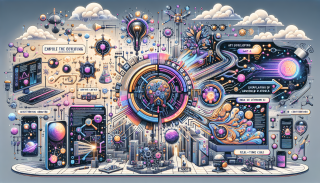
Harnessing AI: Transforming Tomorrow’s Development Landscape
Artificial Intelligence (AI) is revolutionizing the development landscape, offering unprecedented opportunities for innovation and growth. By leveraging AI, industries can enhance efficiency, drive economic progress, and foster sustainable development. This transformation is not just a technological shift but a paradigm change that impacts various sectors, from healthcare to education, and beyond.
AI’s potential in advancing development opportunities is vast. It enables the automation of routine tasks, allowing human resources to focus on more complex and creative endeavors. This shift not only boosts productivity but also encourages innovation. Moreover, AI-driven analytics provide valuable insights, helping organizations make informed decisions and optimize their strategies.
In the healthcare sector, AI is a game-changer. It aids in early diagnosis, personalized treatment plans, and efficient patient management. By analyzing vast amounts of data, AI can identify patterns and predict outcomes, leading to better healthcare services and improved patient outcomes. Similarly, in education, AI-powered tools offer personalized learning experiences, catering to individual student needs and enhancing the overall learning process.
Furthermore, AI contributes significantly to environmental sustainability. Through smart grid technologies and predictive maintenance, AI helps in reducing energy consumption and minimizing waste. It also plays a crucial role in climate modeling and disaster management, providing accurate forecasts and timely alerts to mitigate risks.
In the business realm, AI-driven solutions streamline operations, enhance customer experiences, and drive innovation. From chatbots providing 24/7 customer support to advanced algorithms optimizing supply chains, AI is reshaping the way businesses operate. This transformation leads to increased competitiveness and economic growth.
However, harnessing AI’s full potential requires addressing challenges such as data privacy, ethical considerations, and the digital divide. Ensuring that AI technologies are accessible and beneficial to all is crucial for inclusive development. Policymakers, industry leaders, and stakeholders must collaborate to create a framework that promotes responsible AI use and maximizes its benefits.
In conclusion, AI is a powerful catalyst for development, offering transformative solutions across various sectors. By embracing AI, societies can unlock new opportunities, drive sustainable growth, and build a better future. The journey towards harnessing AI’s potential is ongoing, and its impact on the development landscape will continue to evolve, shaping tomorrow’s world.
AI Innovations: Paving the Way for Future Growth
Artificial Intelligence (AI) is revolutionizing various sectors, driving unprecedented growth and development opportunities. The integration of AI technologies is transforming industries by enhancing efficiency, fostering innovation, and creating new avenues for economic expansion. This technological advancement is not just a trend but a pivotal force shaping the future.
AI innovations are significantly impacting multiple domains:
- Healthcare: AI-powered systems are improving diagnostic accuracy, personalizing treatment plans, and streamlining administrative tasks, leading to better patient outcomes and reduced operational costs.
- Finance: In the financial sector, AI algorithms are optimizing trading strategies, detecting fraudulent activities, and providing personalized financial advice, thereby enhancing security and profitability.
- Manufacturing: AI-driven automation is increasing production efficiency, reducing downtime, and enabling predictive maintenance, which minimizes operational disruptions and maximizes output.
- Retail: Retailers are leveraging AI for inventory management, customer service, and personalized marketing, resulting in improved customer satisfaction and increased sales.
- Transportation: Autonomous vehicles and AI-based traffic management systems are revolutionizing transportation, enhancing safety, and reducing congestion.
The potential of AI extends beyond these sectors, offering transformative benefits across various fields. By harnessing the power of machine learning, natural language processing, and data analytics, businesses can unlock new growth opportunities and stay competitive in an ever-evolving market.
Moreover, AI is fostering innovation by enabling the development of new products and services. Startups and established companies alike are exploring AI-driven solutions to address complex challenges and meet emerging consumer demands. This wave of innovation is creating a dynamic ecosystem where technological advancements drive economic growth and societal progress.
In conclusion, AI innovations are paving the way for future growth by transforming industries, enhancing efficiency, and fostering innovation. As AI continues to evolve, its impact on development opportunities will only expand, offering unprecedented potential for economic and societal advancement.
The Role of Artificial Intelligence in Shaping Development
Artificial Intelligence (AI) is revolutionizing the landscape of development, offering unprecedented opportunities for growth and innovation. By leveraging AI, industries can enhance efficiency, optimize processes, and unlock new potentials. This transformative technology is not just a tool but a catalyst for change, driving advancements across various sectors.
AI’s role in development is multifaceted, encompassing areas such as automation, data analysis, and predictive modeling. Automation powered by AI can streamline operations, reducing human error and increasing productivity. For instance, in manufacturing, AI-driven robots can perform repetitive tasks with precision, freeing up human workers for more complex duties.
Data analysis is another critical area where AI excels. By processing vast amounts of data, AI algorithms can identify patterns and insights that would be impossible for humans to discern. This capability is particularly valuable in fields like healthcare, where AI can analyze medical records to predict disease outbreaks or suggest personalized treatment plans.
Predictive modeling, enabled by AI, allows businesses to forecast trends and make informed decisions. In finance, for example, AI can predict market fluctuations, helping investors make strategic choices. Similarly, in agriculture, AI can forecast weather patterns, aiding farmers in planning their crops more effectively.
Moreover, AI is instrumental in enhancing customer experiences. Through natural language processing and machine learning, AI can provide personalized recommendations and support, improving customer satisfaction. E-commerce platforms, for instance, use AI to suggest products based on user behavior, increasing sales and customer loyalty.
AI’s impact on development is not limited to the private sector. Governments and public institutions are also harnessing AI to improve public services. From smart cities that use AI to manage traffic and reduce energy consumption to AI-driven public health initiatives, the potential applications are vast and varied.
However, the integration of AI in development also presents challenges. Ethical considerations, data privacy, and the potential for job displacement are critical issues that need to be addressed. Ensuring that AI is used responsibly and equitably is essential for maximizing its benefits while minimizing its risks.
In conclusion, AI is a powerful force in shaping development, offering numerous opportunities for innovation and growth. By embracing this technology, industries and governments can drive progress and create a more efficient, data-driven future. The key lies in balancing the benefits of AI with ethical considerations, ensuring that its implementation is both responsible and inclusive.
Unlocking New Possibilities: AI’s Impact on Global Progress
Artificial Intelligence (AI) is revolutionizing global progress by unlocking new possibilities across various sectors. This transformative technology is driving innovation, enhancing efficiency, and fostering unprecedented growth. AI’s impact is profound, influencing industries from healthcare to finance, and education to transportation. By leveraging AI, societies can address complex challenges, streamline operations, and create sustainable solutions.
AI’s ability to process vast amounts of data with remarkable speed and accuracy is a game-changer. It enables predictive analytics, which can foresee trends and outcomes, allowing for proactive decision-making. In healthcare, AI-powered diagnostics and personalized treatment plans are improving patient outcomes. Financial institutions are utilizing AI for fraud detection, risk management, and customer service automation, leading to more secure and efficient operations.
Moreover, AI is playing a crucial role in education by personalizing learning experiences and providing real-time feedback. This technology is also enhancing transportation systems through autonomous vehicles and smart traffic management, reducing congestion and emissions. In agriculture, AI-driven solutions are optimizing crop yields and resource management, contributing to food security and sustainability.
The integration of AI into various sectors is not without challenges. Ethical considerations, data privacy, and the potential for job displacement are significant concerns. However, with responsible implementation and robust regulatory frameworks, the benefits of AI can be maximized while mitigating risks. Collaboration between governments, industries, and academia is essential to ensure that AI advancements are inclusive and equitable.
In conclusion, AI is a powerful catalyst for global progress, offering innovative solutions to some of the world’s most pressing issues. By harnessing the potential of AI, societies can unlock new opportunities for development, drive economic growth, and improve the quality of life for people worldwide. The future of AI holds immense promise, and its responsible deployment will be key to realizing its full potential.
From Concept to Reality: AI’s Influence on Development Opportunities
Artificial Intelligence (AI) is revolutionizing the landscape of development opportunities, transforming abstract concepts into tangible realities. By leveraging AI, businesses and developers can streamline processes, enhance efficiency, and unlock unprecedented potential. This transformation is not just theoretical; it is actively reshaping industries and creating new avenues for growth.
AI’s influence on development opportunities is multifaceted. It enables the automation of routine tasks, allowing human resources to focus on more strategic initiatives. This shift not only boosts productivity but also fosters innovation. For instance, AI-driven analytics can provide deep insights into market trends, consumer behavior, and operational efficiencies, guiding informed decision-making.
Moreover, AI facilitates the rapid prototyping and testing of new ideas. Through machine learning algorithms, developers can simulate various scenarios and outcomes, refining their concepts before actual implementation. This capability significantly reduces the time and cost associated with traditional development cycles.
In the realm of software development, AI-powered tools are enhancing code quality and reducing errors. Automated code reviews, bug detection, and predictive maintenance are just a few examples of how AI is elevating the standards of software engineering. These advancements lead to more robust and reliable applications, ultimately benefiting end-users.
AI is also playing a crucial role in personalized user experiences. By analyzing vast amounts of data, AI systems can tailor products and services to individual preferences, enhancing customer satisfaction and loyalty. This level of personalization was previously unattainable, but AI makes it a reality, driving competitive advantage.
Furthermore, AI’s impact extends to the optimization of supply chains and logistics. Predictive analytics and real-time monitoring enable companies to anticipate demand, manage inventory efficiently, and reduce operational costs. This optimization not only improves profitability but also contributes to sustainability by minimizing waste.
In conclusion, AI is a powerful catalyst for development opportunities, turning visionary ideas into practical solutions. Its ability to automate, analyze, and personalize is transforming industries and paving the way for a future where innovation thrives. As AI continues to evolve, its potential to drive development will only expand, offering limitless possibilities for those who embrace its capabilities.
AI-Driven Solutions: Revolutionizing the Future of Development
Artificial Intelligence (AI) is transforming the landscape of development, offering innovative solutions that are reshaping industries and enhancing productivity. By leveraging AI-driven technologies, businesses can streamline processes, optimize resources, and unlock new opportunities for growth. This revolution is not just a trend but a fundamental shift in how development is approached, promising a future where efficiency and innovation go hand in hand.
AI-driven solutions are particularly impactful in areas such as data analysis, automation, and predictive modeling. These technologies enable organizations to make informed decisions, reduce operational costs, and anticipate market trends with unprecedented accuracy. For instance, machine learning algorithms can analyze vast datasets to identify patterns and insights that would be impossible for humans to discern. This capability is invaluable for sectors ranging from finance to healthcare, where data-driven decisions can lead to significant advancements.
Moreover, AI-powered automation is revolutionizing workflows by taking over repetitive and mundane tasks. This not only increases efficiency but also allows human workers to focus on more strategic and creative endeavors. In manufacturing, for example, AI-driven robots can perform complex assembly tasks with precision, reducing errors and increasing production speed. Similarly, in customer service, AI chatbots provide instant support, improving customer satisfaction and freeing up human agents for more complex issues.
Predictive modeling, another cornerstone of AI-driven solutions, is transforming how businesses plan for the future. By analyzing historical data and identifying trends, AI can forecast future outcomes with remarkable accuracy. This is particularly beneficial in supply chain management, where predicting demand can lead to better inventory control and reduced waste. In marketing, predictive analytics helps in crafting personalized campaigns that resonate with target audiences, thereby increasing engagement and conversion rates.
In addition to these practical applications, AI-driven solutions are fostering innovation by enabling the development of new products and services. For example, in the tech industry, AI is being used to create smarter software that can adapt to user needs in real-time. In the energy sector, AI algorithms optimize the distribution of resources, leading to more sustainable practices. These advancements are not only driving economic growth but also contributing to a more sustainable and equitable future.
In conclusion, AI-driven solutions are revolutionizing the future of development by enhancing efficiency, fostering innovation, and enabling data-driven decision-making. As these technologies continue to evolve, their impact will only grow, offering new opportunities for businesses and society at large. Embracing AI is no longer an option but a necessity for those looking to stay competitive in an increasingly digital world.
Building a Smarter World: The Promise of AI in Development
Artificial Intelligence (AI) is revolutionizing the landscape of development, offering unprecedented opportunities to build a smarter world. By leveraging AI, various sectors can enhance efficiency, foster innovation, and drive sustainable growth. The integration of AI in development projects is not just a futuristic concept but a present-day reality that is reshaping how societies function and progress.
AI’s potential in development is vast and multifaceted. It can optimize resource allocation, streamline processes, and provide data-driven insights that inform decision-making. For instance, in urban planning, AI can analyze vast amounts of data to predict population growth, traffic patterns, and environmental impacts, enabling cities to plan more effectively and sustainably.
Moreover, AI can significantly improve healthcare delivery in developing regions. By analyzing medical data, AI systems can identify disease outbreaks, predict health trends, and suggest personalized treatment plans. This not only enhances patient care but also alleviates the burden on healthcare systems.
In the agricultural sector, AI-driven technologies can monitor crop health, predict weather patterns, and optimize irrigation systems. These innovations help farmers increase yield, reduce waste, and ensure food security. Additionally, AI can facilitate access to financial services for underserved populations by analyzing creditworthiness and providing tailored financial products.
Education is another domain where AI is making a substantial impact. Intelligent tutoring systems can provide personalized learning experiences, adapting to the needs and pace of individual students. This ensures that education is more inclusive and effective, bridging gaps in learning and fostering a knowledgeable society.
AI also plays a crucial role in environmental conservation. By analyzing satellite imagery and sensor data, AI can monitor deforestation, track wildlife populations, and predict natural disasters. These capabilities enable proactive measures to protect ecosystems and mitigate the effects of climate change.
However, the deployment of AI in development must be approached with caution. Ethical considerations, such as data privacy, algorithmic bias, and the digital divide, need to be addressed to ensure that AI benefits all segments of society equitably. Policymakers, technologists, and communities must collaborate to create frameworks that promote responsible AI use.
In conclusion, AI holds immense promise in advancing development opportunities. Its ability to analyze data, predict trends, and optimize processes can drive significant improvements across various sectors. By harnessing the power of AI, it is possible to build a smarter, more sustainable world that benefits everyone.