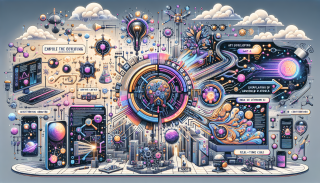
Harnessing the Power of AI for Sustainable Development
Artificial Intelligence (AI) is revolutionizing sustainable development by offering innovative solutions to global challenges. AI tools are instrumental in optimizing resource management, enhancing agricultural productivity, and promoting renewable energy. These advancements contribute significantly to achieving the United Nations’ Sustainable Development Goals (SDGs).
AI-driven technologies enable precise monitoring and management of natural resources. For instance, AI algorithms can analyze satellite imagery to track deforestation, monitor water quality, and predict natural disasters. This data-driven approach ensures efficient resource utilization and helps mitigate environmental impacts.
In agriculture, AI enhances crop yield and reduces waste. Machine learning models predict weather patterns, optimize irrigation, and detect pest infestations. These insights allow farmers to make informed decisions, leading to increased productivity and sustainability.
Renewable energy sectors benefit immensely from AI. Predictive analytics optimize energy production and distribution, reducing reliance on fossil fuels. AI systems manage smart grids, ensuring efficient energy use and minimizing waste. This transition to clean energy sources is crucial for combating climate change.
AI also plays a pivotal role in urban planning and smart cities. Intelligent systems analyze traffic patterns, optimize public transportation, and manage waste. These innovations create sustainable urban environments, improving the quality of life for residents.
Moreover, AI facilitates environmental conservation efforts. Machine learning models identify endangered species and monitor their habitats. This information aids in the development of effective conservation strategies, preserving biodiversity.
AI’s potential in healthcare is transformative. Predictive models diagnose diseases early, improving patient outcomes. AI-driven research accelerates the development of sustainable medical solutions, addressing global health challenges.
In conclusion, AI is a powerful ally in the quest for sustainable development. Its applications span various sectors, driving efficiency, innovation, and sustainability. By harnessing AI’s capabilities, society can make significant strides towards a more sustainable future.
Revolutionizing Industries with Advanced AI Solutions
Advanced AI solutions are transforming various industries by enhancing efficiency, accuracy, and innovation. These cutting-edge technologies are being integrated into numerous sectors, driving significant improvements and fostering growth. AI tools are particularly impactful in areas such as healthcare, finance, manufacturing, and retail, where they streamline operations and provide valuable insights.
In the healthcare sector, AI-driven systems assist in diagnosing diseases, predicting patient outcomes, and personalizing treatment plans. By analyzing vast amounts of medical data, these systems can identify patterns and anomalies that might be missed by human practitioners. This leads to more accurate diagnoses and better patient care.
Financial institutions leverage AI to detect fraudulent activities, automate trading, and enhance customer service. Machine learning algorithms analyze transaction data to identify suspicious behavior, reducing the risk of fraud. Additionally, AI-powered chatbots provide instant support to customers, improving their overall experience.
Manufacturing industries benefit from AI through predictive maintenance, quality control, and supply chain optimization. AI systems monitor equipment performance in real-time, predicting potential failures before they occur. This proactive approach minimizes downtime and reduces maintenance costs. Furthermore, AI enhances quality control by identifying defects in products during the production process, ensuring higher standards.
Retail businesses utilize AI to personalize shopping experiences, manage inventory, and optimize pricing strategies. By analyzing customer data, AI tools can recommend products tailored to individual preferences, increasing sales and customer satisfaction. Inventory management is also improved as AI predicts demand and adjusts stock levels accordingly, reducing waste and ensuring availability.
Overall, the integration of advanced AI solutions across various industries is revolutionizing traditional processes and driving innovation. These technologies not only enhance operational efficiency but also provide a competitive edge, enabling businesses to thrive in an increasingly digital world.
AI Tools: Catalysts for Innovation and Growth
AI tools are revolutionizing the landscape of innovation and growth across various industries. These advanced technologies are not just enhancing productivity but also driving significant advancements in numerous fields. By leveraging AI tools, businesses can streamline operations, optimize processes, and unlock new opportunities for development.
One of the primary benefits of AI tools is their ability to analyze vast amounts of data quickly and accurately. This capability allows companies to make informed decisions based on real-time insights, leading to improved efficiency and effectiveness. Additionally, AI-driven analytics can identify patterns and trends that might be overlooked by human analysis, providing a competitive edge in the market.
Moreover, AI tools facilitate automation, reducing the need for manual intervention in repetitive tasks. This not only saves time but also minimizes the risk of human error, ensuring higher quality and consistency in outputs. Automation powered by AI can be applied in various domains, from customer service to manufacturing, enhancing overall operational performance.
Another significant advantage of AI tools is their role in fostering innovation. By automating routine tasks, AI frees up human resources to focus on creative and strategic initiatives. This shift enables organizations to explore new ideas, develop innovative products, and improve existing services. AI-powered research and development can lead to groundbreaking discoveries and technological advancements, propelling industries forward.
Furthermore, AI tools are instrumental in enhancing customer experiences. Through personalized recommendations, predictive analytics, and natural language processing, AI can deliver tailored solutions that meet individual customer needs. This level of customization not only boosts customer satisfaction but also drives loyalty and retention, contributing to long-term business growth.
In addition to these benefits, AI tools support scalability. As businesses expand, AI can handle increased workloads without compromising performance. This scalability ensures that companies can grow sustainably, adapting to changing demands and market conditions. AI’s ability to scale efficiently makes it an invaluable asset for businesses aiming for long-term success.
In conclusion, AI tools are catalysts for innovation and growth, offering numerous advantages that drive progress across industries. By harnessing the power of AI, businesses can enhance productivity, foster creativity, and deliver exceptional customer experiences. As AI technology continues to evolve, its impact on development and growth will only become more profound, shaping the future of various sectors.
Transforming Business Landscapes through AI Integration
Artificial Intelligence (AI) is revolutionizing the business world, offering unprecedented opportunities for growth and efficiency. By integrating AI tools, companies can streamline operations, enhance customer experiences, and make data-driven decisions. This transformation is not just a trend but a fundamental shift in how businesses operate, providing a competitive edge in a rapidly evolving market.
AI integration enables businesses to automate routine tasks, reducing human error and freeing up resources for more strategic initiatives. Predictive analytics, powered by AI, allows companies to anticipate market trends and customer needs, leading to more informed decision-making. Additionally, AI-driven customer service solutions, such as chatbots, provide instant support, improving customer satisfaction and loyalty.
Moreover, AI tools facilitate personalized marketing strategies by analyzing consumer behavior and preferences. This level of personalization enhances engagement and drives sales, as customers receive tailored recommendations and offers. In supply chain management, AI optimizes logistics, ensuring timely deliveries and reducing costs.
However, the integration of AI in business is not without challenges. Companies must address data privacy concerns and ensure ethical use of AI technologies. Investing in employee training and development is crucial to harness the full potential of AI, as a skilled workforce is essential for successful implementation.
In conclusion, AI integration is transforming business landscapes by enhancing efficiency, improving customer experiences, and enabling data-driven strategies. As companies navigate this transformation, they must balance innovation with ethical considerations and invest in their workforce to fully realize the benefits of AI.
Unlocking New Potentials with Artificial Intelligence
Artificial Intelligence (AI) is revolutionizing various sectors by unlocking new potentials and driving innovation. The integration of AI tools in development processes is transforming how tasks are approached, enhancing efficiency, and fostering creativity. This transformation is not just a technological shift but a paradigm change that redefines possibilities.
AI tools are instrumental in automating repetitive tasks, allowing developers to focus on more complex and creative aspects of their projects. By leveraging machine learning algorithms, these tools can analyze vast amounts of data, identify patterns, and provide insights that were previously unattainable. This capability significantly accelerates the development cycle and improves the quality of outcomes.
Moreover, AI-driven analytics enable predictive modeling, which is crucial for anticipating future trends and making informed decisions. This predictive power is particularly beneficial in fields such as healthcare, finance, and marketing, where understanding future scenarios can lead to better strategic planning and resource allocation.
Another significant advantage of AI tools is their ability to enhance user experience through personalization. By analyzing user behavior and preferences, AI can tailor content and services to meet individual needs, thereby increasing engagement and satisfaction. This personalized approach is becoming a standard expectation in today’s digital landscape.
In addition to these benefits, AI tools are also fostering innovation by providing developers with new ways to experiment and prototype. For instance, AI can generate multiple design options based on specific criteria, allowing developers to explore a wider range of possibilities and select the most effective solutions. This iterative process not only speeds up development but also leads to more innovative and effective outcomes.
Furthermore, AI is playing a crucial role in enhancing security measures. By continuously monitoring systems and identifying potential threats, AI tools can proactively address vulnerabilities and prevent breaches. This proactive approach is essential in an era where cyber threats are increasingly sophisticated and prevalent.
In conclusion, the integration of AI tools in development is unlocking new potentials by automating tasks, providing predictive insights, enhancing personalization, fostering innovation, and improving security. As AI continues to evolve, its impact on development processes will only grow, driving further advancements and opening up new horizons for what can be achieved.
AI-Driven Strategies for Enhanced Productivity
Artificial Intelligence (AI) is revolutionizing productivity strategies, offering developers innovative tools to streamline workflows and enhance efficiency. By leveraging AI-driven solutions, development teams can automate repetitive tasks, optimize resource allocation, and improve project management. These advancements not only save time but also reduce human error, leading to higher quality outputs.
One of the key benefits of AI in development is its ability to analyze vast amounts of data quickly. This capability allows for more informed decision-making and the identification of patterns that might be missed by human analysis. For instance, AI algorithms can predict project timelines, identify potential bottlenecks, and suggest the most efficient paths to completion.
- Automation: AI tools can automate mundane tasks such as code reviews, bug detection, and testing, freeing up developers to focus on more complex issues.
- Resource Optimization: AI can analyze team performance and resource usage, suggesting optimal allocation to maximize productivity.
- Enhanced Collaboration: AI-driven platforms facilitate better communication and collaboration among team members, ensuring everyone is on the same page.
- Predictive Analytics: By analyzing historical data, AI can forecast project outcomes and help in proactive decision-making.
Moreover, AI-powered tools can enhance the development process by providing intelligent code suggestions and real-time feedback. These tools learn from previous projects and adapt to the specific coding style of the team, making them invaluable for maintaining consistency and improving code quality.
In addition to these benefits, AI can also assist in managing project timelines more effectively. By predicting potential delays and suggesting corrective actions, AI ensures that projects stay on track and within budget. This predictive capability is particularly useful in agile development environments, where flexibility and rapid iteration are crucial.
Furthermore, AI-driven analytics can provide deep insights into user behavior and preferences, enabling developers to create more user-centric applications. By understanding how users interact with software, developers can make data-driven improvements that enhance user experience and satisfaction.
In conclusion, AI-driven strategies are transforming the development landscape by enhancing productivity, improving decision-making, and fostering innovation. By integrating AI tools into their workflows, development teams can achieve greater efficiency, higher quality outputs, and a more streamlined development process.
Empowering Communities with Intelligent Technologies
Empowering communities with intelligent technologies is a transformative approach that leverages artificial intelligence (AI) to foster development and enhance quality of life. By integrating AI tools into various sectors, communities can experience significant advancements in healthcare, education, and economic growth. These technologies enable more efficient resource management, improved decision-making processes, and innovative solutions to local challenges.
AI-driven healthcare solutions can revolutionize medical services by providing accurate diagnostics, personalized treatment plans, and predictive analytics. This not only improves patient outcomes but also reduces the burden on healthcare systems. In education, AI tools can offer personalized learning experiences, adaptive assessments, and real-time feedback, ensuring that students receive the support they need to succeed.
Economic growth is another area where AI can make a substantial impact. By automating routine tasks, businesses can increase productivity and reduce operational costs. AI-powered analytics can also provide valuable insights into market trends, helping companies make informed decisions and stay competitive. Furthermore, intelligent technologies can support local entrepreneurs by offering tools for business planning, financial management, and customer engagement.
Resource management is crucial for sustainable development, and AI can play a pivotal role in this domain. Smart systems can optimize energy consumption, manage water resources, and monitor environmental conditions, contributing to a more sustainable future. Additionally, AI can enhance public safety by predicting and preventing crime, managing traffic, and improving emergency response times.
Community engagement is essential for the successful implementation of AI technologies. By involving local stakeholders in the development and deployment of these tools, communities can ensure that the solutions are tailored to their specific needs and challenges. This collaborative approach fosters trust, encourages innovation, and maximizes the benefits of intelligent technologies.
In conclusion, the integration of AI tools into community development initiatives holds immense potential. By harnessing the power of intelligent technologies, communities can achieve sustainable growth, improve quality of life, and create a brighter future for all. The key to success lies in a collaborative, inclusive approach that prioritizes the unique needs and aspirations of each community.