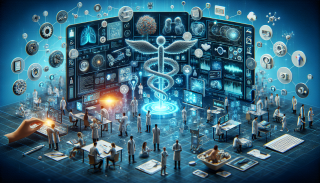
Revolutionizing Patient Care with Artificial Intelligence
Artificial Intelligence (AI) is transforming patient care by enhancing diagnostic accuracy, personalizing treatment plans, and streamlining administrative tasks. AI algorithms analyze vast amounts of medical data, identifying patterns that may elude human practitioners. This capability significantly improves early disease detection, leading to better patient outcomes.
AI-driven tools, such as predictive analytics, enable healthcare providers to anticipate patient needs and intervene proactively. For instance, machine learning models can predict the likelihood of disease progression, allowing for timely and targeted interventions. This proactive approach not only improves health outcomes but also reduces healthcare costs by preventing complications.
Moreover, AI-powered virtual assistants and chatbots offer patients 24/7 access to medical information and support. These tools can answer common health questions, schedule appointments, and provide medication reminders, enhancing patient engagement and adherence to treatment plans. By automating routine tasks, healthcare professionals can focus more on direct patient care, improving overall service quality.
In addition, AI facilitates personalized medicine by analyzing genetic, environmental, and lifestyle data to tailor treatments to individual patients. This precision medicine approach ensures that therapies are more effective and have fewer side effects. AI’s ability to process and interpret complex datasets accelerates the development of new treatments and therapies, driving innovation in medical research.
AI also plays a crucial role in medical imaging, where advanced algorithms can detect anomalies in X-rays, MRIs, and CT scans with remarkable accuracy. These AI systems assist radiologists in diagnosing conditions such as cancer, fractures, and neurological disorders, ensuring timely and accurate diagnoses. Enhanced imaging capabilities lead to better treatment planning and improved patient outcomes.
Furthermore, AI enhances operational efficiency in healthcare facilities by optimizing resource allocation and workflow management. Predictive models can forecast patient admissions, enabling hospitals to allocate staff and resources more effectively. This optimization reduces wait times, improves patient satisfaction, and ensures that healthcare facilities operate smoothly.
In summary, AI is revolutionizing patient care by improving diagnostic accuracy, personalizing treatments, enhancing patient engagement, and optimizing healthcare operations. The integration of AI technologies in healthcare promises a future where patient care is more efficient, effective, and personalized, ultimately leading to better health outcomes and a higher quality of life for patients.
AI-Driven Innovations in Modern Healthcare
Artificial Intelligence (AI) is revolutionizing modern healthcare, offering innovative solutions that enhance patient care and streamline medical processes. AI-driven technologies are transforming diagnostics, treatment plans, and patient management, leading to more efficient and accurate healthcare services.
One of the most significant advancements is in medical imaging. AI algorithms can analyze complex medical images with remarkable precision, identifying anomalies that might be missed by the human eye. This capability is particularly beneficial in early detection of diseases such as cancer, where early intervention can significantly improve patient outcomes.
AI is also making strides in personalized medicine. By analyzing vast amounts of patient data, AI systems can predict how individuals will respond to different treatments. This enables healthcare providers to tailor therapies to each patient’s unique genetic makeup, lifestyle, and medical history, enhancing the effectiveness of treatments and reducing adverse effects.
In the realm of patient management, AI-powered chatbots and virtual assistants are becoming increasingly prevalent. These tools can handle routine inquiries, schedule appointments, and provide medical advice, freeing up healthcare professionals to focus on more complex tasks. Additionally, AI can monitor patient vitals in real-time, alerting medical staff to any critical changes that require immediate attention.
Another area where AI is making a significant impact is in drug discovery. Traditional methods of developing new medications are time-consuming and costly. AI can expedite this process by predicting how different compounds will interact with biological targets, identifying promising candidates for further testing. This not only accelerates the development of new drugs but also reduces the costs associated with bringing them to market.
AI’s role in healthcare extends to administrative tasks as well. Machine learning algorithms can optimize hospital operations, from managing patient flow to predicting staffing needs. This leads to more efficient use of resources and improved patient care. Furthermore, AI can assist in maintaining electronic health records, ensuring that patient information is accurate, up-to-date, and easily accessible to authorized personnel.
Despite these advancements, the integration of AI in healthcare is not without challenges. Issues such as data privacy, algorithmic bias, and the need for regulatory oversight must be addressed to ensure that AI technologies are used ethically and effectively. However, the potential benefits of AI in healthcare are immense, promising a future where medical care is more personalized, efficient, and accessible.
In conclusion, AI-driven innovations are reshaping the landscape of modern healthcare. From enhancing diagnostic accuracy to personalizing treatment plans and streamlining administrative tasks, AI is poised to play a pivotal role in the future of medicine. As these technologies continue to evolve, they hold the promise of significantly improving patient outcomes and transforming the way healthcare is delivered.
The Role of Machine Learning in Medical Diagnostics
Machine learning is revolutionizing medical diagnostics by enhancing accuracy and efficiency. This technology leverages vast datasets to identify patterns and anomalies that may be imperceptible to human clinicians. By integrating machine learning algorithms, healthcare providers can significantly improve diagnostic precision, leading to better patient outcomes.
One of the primary advantages of machine learning in medical diagnostics is its ability to process and analyze large volumes of data swiftly. This capability is particularly beneficial in radiology, where algorithms can examine medical images to detect early signs of diseases such as cancer. These systems can highlight areas of concern, allowing radiologists to focus on potential issues more effectively.
Moreover, machine learning models can continuously learn and adapt from new data, enhancing their diagnostic capabilities over time. This adaptability ensures that the diagnostic tools remain up-to-date with the latest medical research and clinical practices. For instance, in pathology, machine learning can assist in analyzing tissue samples, identifying abnormal cells with high precision.
Another significant application is in predictive analytics. Machine learning algorithms can predict the likelihood of disease outbreaks or patient readmissions by analyzing historical data and identifying risk factors. This predictive power enables healthcare providers to implement preventive measures, improving overall healthcare quality and reducing costs.
Additionally, machine learning facilitates personalized medicine by tailoring treatments to individual patients. By analyzing genetic information and patient history, algorithms can recommend the most effective treatment plans, minimizing trial-and-error approaches. This personalized approach not only enhances treatment efficacy but also reduces adverse effects.
Despite its numerous benefits, the integration of machine learning in medical diagnostics also presents challenges. Ensuring data privacy and security is paramount, as sensitive patient information is involved. Moreover, the accuracy of machine learning models depends on the quality of the data they are trained on. Therefore, continuous efforts are required to maintain data integrity and address any biases in the datasets.
In conclusion, machine learning is a transformative force in medical diagnostics, offering enhanced accuracy, efficiency, and personalized care. By harnessing the power of this technology, healthcare providers can improve diagnostic processes, leading to better patient outcomes and more efficient healthcare systems.
Transforming Healthcare Delivery through AI
Artificial Intelligence (AI) is revolutionizing healthcare delivery, offering unprecedented opportunities to enhance patient care, streamline operations, and improve outcomes. By integrating AI technologies, healthcare providers can leverage data-driven insights to make more informed decisions, ultimately transforming the patient experience.
One of the most significant impacts of AI in healthcare is its ability to analyze vast amounts of data quickly and accurately. This capability enables early detection of diseases, personalized treatment plans, and predictive analytics. For instance, AI algorithms can identify patterns in medical images, assisting radiologists in diagnosing conditions such as cancer at an earlier stage.
Moreover, AI-powered tools are enhancing the efficiency of administrative tasks. Automated systems can manage patient records, schedule appointments, and handle billing processes, reducing the burden on healthcare staff and allowing them to focus more on patient care. This automation not only improves operational efficiency but also minimizes the risk of human error.
In addition to administrative improvements, AI is playing a crucial role in clinical decision support. Machine learning models can analyze patient data to provide recommendations for treatment options, predict potential complications, and suggest preventive measures. This support helps clinicians make more accurate and timely decisions, ultimately improving patient outcomes.
Furthermore, AI-driven telemedicine platforms are expanding access to healthcare services, especially in remote and underserved areas. These platforms enable virtual consultations, remote monitoring, and real-time communication between patients and healthcare providers. By breaking down geographical barriers, AI is making healthcare more accessible and convenient for patients.
Another area where AI is making a significant impact is in drug discovery and development. AI algorithms can analyze biological data to identify potential drug candidates, predict their efficacy, and optimize clinical trials. This accelerates the development process, bringing new treatments to market faster and more cost-effectively.
Overall, the integration of AI technologies in healthcare is transforming the way services are delivered. By enhancing diagnostic accuracy, streamlining administrative tasks, supporting clinical decisions, expanding access to care, and accelerating drug development, AI is paving the way for a more efficient, effective, and patient-centered healthcare system.
Enhancing Clinical Decision-Making with AI Technologies
Artificial Intelligence (AI) technologies are revolutionizing clinical decision-making, offering unprecedented accuracy and efficiency. By integrating AI into healthcare, medical professionals can leverage advanced algorithms to analyze vast amounts of data swiftly. This enables more precise diagnoses, personalized treatment plans, and improved patient outcomes.
AI-driven systems can process complex datasets from various sources, including electronic health records (EHRs), medical imaging, and genomic data. These systems utilize machine learning and deep learning techniques to identify patterns and correlations that might be overlooked by human analysis. Consequently, AI enhances the ability to predict disease progression, recommend optimal therapies, and monitor patient responses in real-time.
Moreover, AI technologies facilitate the early detection of diseases, which is crucial for conditions like cancer and cardiovascular diseases. By analyzing imaging data, AI can identify anomalies at an early stage, allowing for timely intervention. This not only improves survival rates but also reduces the overall cost of treatment by preventing the progression of diseases.
Another significant advantage of AI in clinical decision-making is its ability to provide decision support tools for healthcare providers. These tools offer evidence-based recommendations, ensuring that clinicians have access to the latest research and clinical guidelines. This is particularly beneficial in complex cases where multiple treatment options are available, helping to determine the most effective course of action.
AI also plays a pivotal role in personalized medicine. By analyzing individual patient data, AI can tailor treatments to the specific needs of each patient. This approach considers genetic, environmental, and lifestyle factors, leading to more effective and targeted therapies. Personalized medicine not only enhances treatment efficacy but also minimizes adverse effects, improving the overall patient experience.
Furthermore, AI technologies streamline administrative tasks, allowing healthcare professionals to focus more on patient care. Automated systems can handle routine tasks such as scheduling, billing, and documentation, reducing the administrative burden on medical staff. This increases efficiency and ensures that healthcare providers can dedicate more time to clinical duties.
In conclusion, the integration of AI technologies in clinical decision-making is transforming healthcare services. By providing accurate diagnoses, personalized treatments, and efficient administrative support, AI enhances the quality of care and optimizes patient outcomes. As AI continues to evolve, its impact on healthcare will undoubtedly grow, paving the way for a more advanced and efficient healthcare system.
AI-Powered Tools for Improved Patient Outcomes
Artificial Intelligence (AI) is revolutionizing healthcare by providing innovative tools that enhance patient outcomes. These AI-powered tools are designed to assist healthcare professionals in diagnosing, treating, and managing various medical conditions more effectively. By leveraging advanced algorithms and machine learning, these tools can analyze vast amounts of data, identify patterns, and make predictions that support clinical decision-making.
One of the primary applications of AI in healthcare is in medical imaging. AI algorithms can process and interpret medical images with remarkable accuracy, often surpassing human capabilities. This leads to earlier detection of diseases such as cancer, enabling timely intervention and improving survival rates. Additionally, AI-powered diagnostic tools can assist in identifying rare conditions that might be overlooked by human eyes.
Another significant area where AI is making a substantial impact is in personalized medicine. By analyzing genetic information, lifestyle factors, and medical history, AI can help tailor treatment plans to individual patients. This personalized approach ensures that patients receive the most effective therapies, reducing the risk of adverse reactions and improving overall health outcomes.
AI is also transforming the way chronic diseases are managed. For instance, AI-driven applications can monitor patients’ vital signs in real-time, alerting healthcare providers to any anomalies that may indicate a worsening condition. This proactive approach allows for timely interventions, preventing complications and hospitalizations.
Moreover, AI-powered virtual assistants are becoming increasingly popular in healthcare settings. These assistants can handle routine tasks such as scheduling appointments, providing medication reminders, and answering patient queries. By automating these tasks, healthcare professionals can focus more on direct patient care, enhancing the overall patient experience.
In addition to these applications, AI is playing a crucial role in drug discovery and development. AI algorithms can analyze vast datasets to identify potential drug candidates, predict their efficacy, and optimize clinical trials. This accelerates the development of new treatments, bringing life-saving medications to market faster.
Furthermore, AI is enhancing telemedicine services, making healthcare more accessible to remote and underserved populations. AI-powered platforms can facilitate virtual consultations, remote monitoring, and even remote surgeries, bridging the gap between patients and healthcare providers.
Overall, the integration of AI-powered tools in healthcare is leading to improved patient outcomes by enabling more accurate diagnoses, personalized treatments, proactive disease management, and efficient healthcare delivery. As AI technology continues to evolve, its potential to transform healthcare and enhance patient care will only grow, promising a future where healthcare is more precise, efficient, and accessible.
The Future of Healthcare: Integrating AI for Better Services
Artificial Intelligence (AI) is revolutionizing the healthcare industry by enhancing service delivery and patient outcomes. The integration of AI technologies into healthcare systems promises to transform various aspects of medical practice, from diagnostics to treatment plans. This transformation is driven by AI’s ability to analyze vast amounts of data quickly and accurately, providing healthcare professionals with insights that were previously unattainable.
AI’s role in healthcare can be categorized into several key areas:
- Diagnostics: AI algorithms can process medical images and data to identify diseases at an early stage, often with greater accuracy than human practitioners. This early detection is crucial for conditions like cancer, where timely intervention can significantly improve survival rates.
- Personalized Treatment: By analyzing patient data, AI can help tailor treatment plans to individual needs, ensuring more effective and efficient care. This personalized approach can lead to better patient outcomes and reduced healthcare costs.
- Predictive Analytics: AI can predict patient outcomes and potential complications by analyzing historical data. This predictive capability allows for proactive measures, improving patient care and reducing hospital readmissions.
- Administrative Efficiency: AI can automate routine administrative tasks, such as scheduling and billing, freeing up healthcare professionals to focus on patient care. This automation leads to increased efficiency and reduced operational costs.
- Drug Discovery: AI accelerates the drug discovery process by identifying potential drug candidates and predicting their effectiveness. This acceleration can lead to faster development of new treatments and therapies.
The integration of AI in healthcare is not without challenges. Issues such as data privacy, ethical considerations, and the need for robust regulatory frameworks must be addressed to ensure the safe and effective use of AI technologies. However, the potential benefits far outweigh these challenges, making AI an indispensable tool in the future of healthcare.
In conclusion, the integration of AI into healthcare systems holds immense promise for improving service delivery and patient outcomes. By leveraging AI’s capabilities in diagnostics, personalized treatment, predictive analytics, administrative efficiency, and drug discovery, the healthcare industry can achieve unprecedented levels of efficiency and effectiveness. As these technologies continue to evolve, they will undoubtedly play a pivotal role in shaping the future of healthcare.