
Harnessing AI for Wildlife Conservation
Artificial Intelligence (AI) is revolutionizing wildlife conservation efforts, offering innovative solutions to protect endangered species and their habitats. By leveraging advanced algorithms and machine learning, AI can analyze vast amounts of data, providing critical insights that were previously unattainable. This technology aids in monitoring animal populations, detecting poaching activities, and preserving biodiversity.
One of the primary applications of AI in wildlife conservation is through the use of camera traps. These devices, equipped with motion sensors, capture images of animals in their natural habitats. AI algorithms then process these images, identifying species and tracking their movements. This method not only saves time but also increases the accuracy of population estimates, which is crucial for effective conservation strategies.
Another significant contribution of AI is in combating illegal poaching. AI-powered drones and surveillance systems can monitor vast areas, detecting suspicious activities in real-time. These systems use pattern recognition to identify potential threats, allowing for rapid response by conservation teams. This proactive approach significantly reduces the risk of poaching, safeguarding endangered species from extinction.
AI also plays a vital role in habitat preservation. By analyzing satellite imagery, AI can detect changes in land use, deforestation, and other environmental threats. This information is essential for developing conservation plans and implementing measures to protect critical ecosystems. Additionally, AI can predict the impact of climate change on wildlife habitats, enabling conservationists to take preemptive actions to mitigate adverse effects.
Furthermore, AI facilitates the study of animal behavior. Machine learning models can analyze vocalizations, movement patterns, and social interactions, providing deeper insights into the lives of various species. This knowledge is invaluable for creating effective conservation programs tailored to the specific needs of different animals.
In summary, AI is a powerful tool in the fight for wildlife conservation. Its ability to process and analyze large datasets, monitor activities, and predict environmental changes makes it indispensable for preserving biodiversity. As technology continues to advance, the potential for AI to contribute to ecological preservation will only grow, offering new hope for the protection of our planet’s precious wildlife.
AI-Driven Solutions for Environmental Protection
Artificial Intelligence (AI) is revolutionizing environmental protection through innovative solutions that address ecological challenges. By leveraging advanced algorithms and machine learning, AI-driven technologies are enhancing conservation efforts, optimizing resource management, and mitigating environmental impacts.
One significant application of AI in environmental protection is in monitoring and analyzing vast amounts of ecological data. AI systems can process satellite imagery, sensor data, and climate models to detect patterns and predict environmental changes. This capability allows for early detection of deforestation, illegal fishing, and wildlife poaching, enabling timely interventions.
AI also plays a crucial role in optimizing energy consumption and reducing carbon footprints. Smart grids powered by AI can balance energy supply and demand, integrate renewable energy sources, and improve energy efficiency. These systems help reduce greenhouse gas emissions and promote sustainable energy practices.
In agriculture, AI-driven solutions are enhancing sustainable farming practices. Precision agriculture uses AI to analyze soil health, weather conditions, and crop performance. This information helps farmers make informed decisions about irrigation, fertilization, and pest control, leading to higher yields and reduced environmental impact.
Furthermore, AI is instrumental in waste management and recycling. Intelligent sorting systems use AI to identify and separate recyclable materials from waste streams. This technology increases recycling rates and reduces the amount of waste sent to landfills, contributing to a circular economy.
AI-driven models are also being used to predict and manage natural disasters. By analyzing historical data and real-time information, AI can forecast events such as floods, hurricanes, and wildfires. These predictions enable authorities to take proactive measures, minimizing damage and saving lives.
In the realm of biodiversity conservation, AI assists in tracking and protecting endangered species. Machine learning algorithms can identify individual animals through camera trap images and acoustic monitoring. This data helps conservationists monitor population trends and implement effective protection strategies.
Overall, AI-driven solutions are proving to be invaluable tools in the fight against environmental degradation. By harnessing the power of AI, society can develop more effective strategies for ecological preservation, ensuring a sustainable future for generations to come.
The Role of Artificial Intelligence in Biodiversity Preservation
Artificial Intelligence (AI) is revolutionizing biodiversity preservation by offering innovative solutions to monitor, analyze, and protect ecosystems. AI-driven technologies are enhancing the ability to track species, predict environmental changes, and implement conservation strategies effectively. These advancements are crucial in addressing the rapid decline in biodiversity caused by human activities and climate change.
One of the primary applications of AI in biodiversity preservation is species monitoring. AI-powered tools, such as camera traps and drones equipped with machine learning algorithms, can identify and count species in various habitats. This data collection is essential for understanding population dynamics and detecting endangered species. Additionally, AI can analyze acoustic data to monitor vocalizations of birds, mammals, and amphibians, providing insights into their behavior and population health.
AI also plays a significant role in habitat mapping and environmental monitoring. Satellite imagery combined with AI algorithms can create detailed maps of ecosystems, highlighting areas of deforestation, habitat fragmentation, and other environmental threats. These maps are invaluable for conservationists to prioritize areas for protection and restoration. Furthermore, AI can predict the impact of climate change on different species and ecosystems, enabling proactive measures to mitigate adverse effects.
Another critical aspect of AI in biodiversity preservation is its ability to combat illegal activities such as poaching and logging. AI systems can analyze patterns in data from various sources, including social media, to identify and predict illegal activities. This information allows authorities to take timely action and prevent further damage to wildlife and their habitats. Moreover, AI can enhance the effectiveness of anti-poaching patrols by optimizing their routes based on real-time data.
AI-driven citizen science initiatives are also contributing to biodiversity preservation. Mobile applications powered by AI enable individuals to record and share observations of wildlife, creating a vast database of biodiversity information. This collective effort not only raises awareness but also provides valuable data for researchers and conservationists. AI algorithms can process this data to identify trends and inform conservation strategies.
In conclusion, AI is a powerful tool in the fight to preserve biodiversity. Its applications in species monitoring, habitat mapping, environmental monitoring, and combating illegal activities are transforming conservation efforts. By leveraging AI, it is possible to gain a deeper understanding of ecosystems, predict future challenges, and implement effective strategies to protect the planet’s biodiversity.
Smart Technologies Combatting Climate Change
Smart technologies are playing a pivotal role in combatting climate change, leveraging artificial intelligence (AI) to enhance ecological preservation. These advanced systems are revolutionizing how environmental data is collected, analyzed, and utilized, leading to more effective conservation strategies.
AI-driven solutions are being employed to monitor and predict environmental changes with unprecedented accuracy. For instance, machine learning algorithms can analyze satellite imagery to detect deforestation, track wildlife populations, and monitor ocean health. This real-time data enables swift action to mitigate adverse effects on ecosystems.
Moreover, AI-powered sensors and Internet of Things (IoT) devices are being deployed in various ecosystems to gather continuous environmental data. These sensors can measure air and water quality, soil moisture, and temperature variations, providing valuable insights for sustainable resource management. By integrating this data, AI systems can predict environmental trends and suggest proactive measures to prevent ecological degradation.
Another significant application of AI in ecological preservation is in optimizing energy consumption. Smart grids, powered by AI, can balance energy supply and demand, reducing waste and promoting the use of renewable energy sources. Additionally, AI algorithms can optimize the operation of wind turbines and solar panels, enhancing their efficiency and reducing carbon emissions.
AI is also instrumental in developing climate models that predict future environmental scenarios. These models help policymakers and conservationists devise strategies to combat climate change effectively. By simulating various climate conditions, AI can identify potential risks and recommend adaptive measures to safeguard ecosystems.
Furthermore, AI is aiding in the restoration of degraded ecosystems. Machine learning techniques can identify the most effective methods for reforestation, soil restoration, and habitat reconstruction. By analyzing historical data and current conditions, AI can suggest the best practices for ecological restoration, ensuring long-term sustainability.
In conclusion, smart technologies, particularly those powered by AI, are crucial in the fight against climate change. By providing accurate data, optimizing resource use, and predicting future scenarios, AI is enabling more informed and effective ecological preservation efforts. As these technologies continue to evolve, their impact on environmental conservation is expected to grow, offering new hope in the battle against climate change.
AI Innovations in Habitat Restoration
Artificial Intelligence (AI) is revolutionizing habitat restoration, offering innovative solutions to ecological challenges. By leveraging advanced algorithms and machine learning, AI enhances the efficiency and effectiveness of restoration projects. These technologies enable precise monitoring, data analysis, and predictive modeling, which are crucial for successful habitat recovery.
AI-driven tools can analyze vast amounts of environmental data, identifying patterns and trends that human observation might miss. This capability allows for the early detection of ecological disturbances, enabling timely interventions. For instance, AI can monitor soil health, water quality, and vegetation growth, providing real-time insights that guide restoration efforts.
Moreover, AI-powered drones and remote sensing technologies play a pivotal role in habitat restoration. These devices can survey large areas quickly and accurately, capturing high-resolution images and data. This information is invaluable for mapping ecosystems, assessing damage, and planning restoration activities. By automating these processes, AI reduces the time and resources required for fieldwork, making restoration projects more cost-effective.
Another significant application of AI in habitat restoration is the development of predictive models. These models use historical and real-time data to forecast future ecological conditions. By predicting the impacts of climate change, human activities, and natural events, AI helps conservationists devise proactive strategies. This foresight is essential for creating resilient ecosystems that can withstand environmental stressors.
AI also facilitates community involvement in habitat restoration. Citizen science platforms powered by AI enable individuals to contribute data through mobile apps and online portals. This collective effort enhances data collection and fosters public awareness and engagement in conservation initiatives. By democratizing data collection, AI empowers communities to take an active role in preserving their local environments.
In summary, AI innovations are transforming habitat restoration by providing advanced tools for monitoring, analysis, and prediction. These technologies enhance the precision and efficiency of restoration efforts, making them more effective and sustainable. As AI continues to evolve, its role in ecological preservation will undoubtedly expand, offering new possibilities for protecting and restoring natural habitats.
Predictive Analytics for Ecosystem Management
Predictive analytics, powered by artificial intelligence, is revolutionizing ecosystem management. By leveraging vast datasets, AI can forecast environmental changes, enabling proactive measures to preserve biodiversity. This technology analyzes patterns in climate data, wildlife populations, and habitat conditions, providing invaluable insights for conservation efforts.
AI-driven predictive models can identify potential threats to ecosystems, such as invasive species or climate anomalies, before they cause irreversible damage. These models utilize machine learning algorithms to process complex ecological data, offering precise predictions that guide conservation strategies. For instance, AI can predict the migration patterns of endangered species, allowing for the creation of protected corridors that ensure their survival.
Moreover, predictive analytics aids in resource allocation, ensuring that conservation efforts are both effective and efficient. By forecasting areas at risk, resources can be directed to where they are most needed, maximizing the impact of preservation initiatives. This targeted approach not only conserves financial resources but also enhances the overall success rate of ecological projects.
In addition, AI’s ability to process real-time data allows for dynamic ecosystem management. Continuous monitoring and analysis enable rapid response to emerging threats, minimizing their impact on the environment. This real-time capability is crucial in addressing sudden changes, such as natural disasters or human-induced disturbances, ensuring that ecosystems remain resilient.
Furthermore, predictive analytics fosters collaboration among conservationists, researchers, and policymakers. By providing a common platform for data sharing and analysis, AI facilitates coordinated efforts to tackle environmental challenges. This collaborative approach enhances the effectiveness of conservation strategies, promoting sustainable ecosystem management.
In conclusion, predictive analytics, driven by artificial intelligence, is a game-changer in ecosystem management. Its ability to forecast environmental changes, allocate resources efficiently, and enable real-time responses makes it an indispensable tool for ecological preservation. As AI technology continues to evolve, its impact on conservation efforts will undoubtedly grow, paving the way for a more sustainable future.
Artificial Intelligence: A New Ally in Ecological Preservation
Artificial Intelligence (AI) is revolutionizing ecological preservation by providing innovative solutions to complex environmental challenges. AI technologies are being harnessed to monitor ecosystems, predict environmental changes, and enhance conservation efforts. These advancements are crucial in addressing the pressing issues of climate change, habitat destruction, and biodiversity loss.
One of the primary applications of AI in ecological preservation is in environmental monitoring. AI-powered sensors and drones are deployed to collect data on various ecological parameters, such as air and water quality, wildlife populations, and vegetation health. This data is then analyzed using machine learning algorithms to detect patterns and anomalies, enabling early intervention and informed decision-making.
AI also plays a significant role in predictive modeling. By analyzing historical data and current trends, AI systems can forecast future environmental conditions and potential threats. This predictive capability is invaluable for developing proactive conservation strategies and mitigating the impacts of natural disasters, such as wildfires and floods.
In addition to monitoring and prediction, AI is enhancing species conservation efforts. Machine learning algorithms are used to identify and track endangered species, monitor their habitats, and assess the effectiveness of conservation programs. AI-driven image recognition technology can analyze camera trap images to identify individual animals, providing critical data for population studies and habitat management.
Furthermore, AI is aiding in the fight against illegal wildlife trade. Advanced algorithms can analyze online marketplaces and social media platforms to detect and track illegal activities related to wildlife trafficking. This information is then used by law enforcement agencies to combat poaching and protect endangered species.
Another significant application of AI in ecological preservation is in ecosystem restoration. AI-driven models can simulate the impacts of various restoration strategies, helping conservationists to identify the most effective approaches. These models can also predict the long-term outcomes of restoration efforts, ensuring sustainable and resilient ecosystems.
In conclusion, AI is proving to be a powerful ally in ecological preservation. By leveraging advanced technologies for monitoring, prediction, conservation, and restoration, AI is helping to safeguard our planet’s natural resources and biodiversity. As AI continues to evolve, its potential to address environmental challenges and promote sustainable practices will only grow, making it an indispensable tool in the quest for ecological preservation.



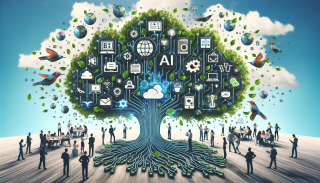


As an environmental activist, I have seen firsthand the positive impact AI can have on ecological preservation. From monitoring wildlife populations to predicting natural disasters, AI technology is revolutionizing the way we protect our planet. However, we must also be cautious of the potential risks and ethical implications that come with this advancement. How can we ensure that AI is used responsibly in environmental conservation efforts?
I recently read about AI being used to combat illegal poaching in Africa, and it’s truly inspiring to see technology being leveraged for such important causes. It’s amazing how AI can analyze vast amounts of data to help conservationists make informed decisions. I’m curious to know more about the specific AI tools and algorithms that are being used in ecological preservation projects.
I’ve always been fascinated by the intersection of technology and nature, so the growing impact of AI on ecological preservation is a topic that really interests me. It’s incredible to think about the potential of AI in monitoring and protecting endangered species. I wonder how AI can be integrated with traditional conservation methods to maximize its effectiveness.
As an environmental activist, I have seen firsthand the positive impact AI can have on ecological preservation. From monitoring wildlife populations to predicting natural disasters, AI technology is revolutionizing the way we protect our planet. However, we must also be cautious of the potential risks and ethical implications that come with this advancement.
I recently read about AI being used to combat illegal poaching in Africa, and it’s truly inspiring to see technology being leveraged for such important causes. It’s amazing how AI can analyze vast amounts of data to help conservationists make informed decisions. I’m curious to learn more about the specific AI tools being used in different ecological preservation projects.
I’ve always been passionate about nature, and the intersection of AI and ecological preservation fascinates me. It’s incredible to think about how AI can help us better understand ecosystems and address environmental challenges. I wonder how accessible this technology is for smaller conservation organizations and what steps are being taken to ensure its responsible use.
I work in the field of environmental science, and AI has become an invaluable tool in our research. The ability of AI to process complex data sets and identify patterns has greatly enhanced our understanding of ecological systems. However, there are concerns about data privacy and the potential for AI to replace human decision-making in conservation efforts. It’s a complex issue that requires careful consideration.
As an environmental activist, I have seen firsthand the positive impact AI can have on ecological preservation. From monitoring wildlife populations to predicting natural disasters, AI technology is revolutionizing the way we protect our planet. However, we must also be cautious of the potential risks and ethical implications that come with this advancement. How can we ensure that AI is used responsibly in environmental conservation efforts?
I recently read about the use of AI in tracking deforestation patterns and identifying areas at risk. It’s incredible how technology can aid in preserving our forests and biodiversity. I wonder how accessible this technology is to smaller organizations and developing countries that may not have the resources to invest in AI systems. Are there any initiatives to make AI tools more widely available for conservation purposes?
I have always been passionate about nature and wildlife conservation. The integration of AI in ecological preservation efforts is both exciting and concerning. While AI can enhance efficiency in monitoring and protecting ecosystems, there is a fear of overreliance on technology and the potential loss of human connection to the environment. How can we strike a balance between utilizing AI advancements and maintaining a hands-on approach to conservation work?