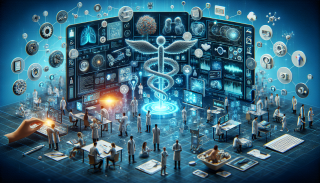
Revolutionizing Diagnostics: AI’s Role in Early Disease Detection
Artificial Intelligence (AI) is transforming the landscape of medical diagnostics, offering unprecedented accuracy in early disease detection. By leveraging machine learning algorithms, AI systems can analyze vast amounts of medical data, identifying patterns and anomalies that may elude human practitioners. This capability is particularly crucial in the early identification of conditions such as cancer, cardiovascular diseases, and neurological disorders.
AI-driven diagnostic tools utilize advanced imaging techniques, such as MRI and CT scans, to detect minute changes in tissue structures. These tools can highlight potential issues long before symptoms manifest, enabling timely intervention and improving patient outcomes. For instance, AI algorithms can scrutinize mammograms with remarkable precision, identifying early signs of breast cancer that might be missed by the human eye.
Moreover, AI’s role extends beyond imaging. Natural language processing (NLP) algorithms can sift through electronic health records (EHRs) to flag potential health risks based on patient history and genetic information. This holistic approach ensures a comprehensive analysis, integrating various data points to provide a more accurate diagnosis.
Another significant advantage of AI in diagnostics is its ability to continuously learn and improve. As more data is fed into these systems, their predictive accuracy enhances, leading to even more reliable diagnoses. This iterative learning process is a game-changer in the medical field, where the stakes are incredibly high.
AI also facilitates personalized medicine by tailoring diagnostic processes to individual patients. By considering unique genetic markers and lifestyle factors, AI can recommend specific tests and screenings, ensuring that each patient receives the most relevant and effective care. This personalized approach not only improves diagnostic accuracy but also enhances patient satisfaction and trust in the healthcare system.
In addition to improving diagnostic accuracy, AI reduces the burden on healthcare professionals. Automated systems can handle routine tasks, allowing doctors to focus on more complex cases and patient interactions. This efficiency not only speeds up the diagnostic process but also reduces the likelihood of human error, further enhancing patient safety.
Furthermore, AI’s integration into telemedicine platforms has expanded access to diagnostic services, especially in remote or underserved areas. Patients can now receive expert diagnostic evaluations without the need for travel, making healthcare more accessible and equitable.
In conclusion, AI is revolutionizing the field of medical diagnostics, offering unparalleled accuracy and efficiency in early disease detection. By harnessing the power of machine learning, advanced imaging, and natural language processing, AI systems provide a comprehensive and personalized approach to healthcare. This transformation not only improves patient outcomes but also enhances the overall efficiency and accessibility of medical services.
Personalized Treatment Plans: How AI Tailors Healthcare to Individual Needs
Artificial Intelligence (AI) is revolutionizing healthcare by creating personalized treatment plans tailored to individual needs. This advanced technology analyzes vast amounts of data, including medical history, genetic information, and lifestyle factors, to develop customized healthcare strategies. By leveraging AI, healthcare providers can offer more precise and effective treatments, improving patient outcomes and satisfaction.
AI-driven personalized treatment plans utilize machine learning algorithms to identify patterns and predict potential health issues. These algorithms can process complex datasets much faster than traditional methods, enabling early detection and intervention. For instance, AI can predict the likelihood of chronic diseases such as diabetes or heart disease, allowing for preventive measures to be implemented promptly.
Moreover, AI enhances the accuracy of diagnoses by cross-referencing patient data with a vast database of medical knowledge. This ensures that healthcare professionals have access to the most up-to-date information, reducing the risk of misdiagnosis. Personalized treatment plans also consider individual responses to medications, minimizing adverse effects and optimizing therapeutic outcomes.
Another significant advantage of AI in personalized healthcare is its ability to continuously learn and adapt. As more data is collected, AI systems refine their predictions and recommendations, ensuring that treatment plans remain relevant and effective. This dynamic approach to healthcare allows for ongoing adjustments based on real-time data, providing patients with the best possible care.
In addition to improving individual patient care, AI-driven personalized treatment plans contribute to the overall efficiency of healthcare systems. By streamlining processes and reducing the need for trial-and-error approaches, AI helps to lower costs and allocate resources more effectively. This not only benefits patients but also supports healthcare providers in delivering high-quality care.
In conclusion, AI is transforming healthcare by offering personalized treatment plans that cater to individual needs. Through advanced data analysis, accurate diagnoses, and continuous learning, AI enhances patient care and optimizes healthcare outcomes. As this technology continues to evolve, its impact on personalized healthcare will undoubtedly grow, paving the way for a more efficient and effective healthcare system.
Streamlining Administrative Tasks: AI’s Contribution to Efficient Healthcare Management
Artificial Intelligence (AI) is revolutionizing healthcare management by streamlining administrative tasks, leading to more efficient operations. AI-driven systems automate routine processes, reducing the burden on healthcare professionals and allowing them to focus on patient care. This transformation is achieved through various applications, including scheduling, billing, and data management.
AI-powered scheduling tools optimize appointment bookings, minimizing no-shows and ensuring better resource allocation. These systems analyze patient data and preferences to suggest optimal times, enhancing the overall patient experience. Additionally, AI algorithms can predict patient flow, helping healthcare facilities manage their workforce more effectively.
In the realm of billing, AI simplifies complex coding and billing procedures, reducing errors and speeding up the reimbursement process. Automated systems can accurately process claims, identify discrepancies, and ensure compliance with regulations. This not only improves financial performance but also reduces administrative workload.
Data management is another area where AI excels. By automating data entry and analysis, AI systems ensure accurate and up-to-date patient records. This facilitates better decision-making and enhances the quality of care. AI can also identify patterns and trends in patient data, providing valuable insights for preventive care and treatment plans.
Moreover, AI enhances communication within healthcare organizations. Intelligent chatbots and virtual assistants handle routine inquiries, freeing up staff to address more complex issues. These tools provide instant responses, improving patient satisfaction and operational efficiency.
Overall, the integration of AI in healthcare management leads to significant time and cost savings. By automating administrative tasks, AI allows healthcare providers to allocate more resources to patient care, ultimately improving outcomes. The continuous evolution of AI technologies promises even greater advancements in the future, further transforming the healthcare landscape.
Predictive Analytics: Anticipating Health Issues Before They Arise
Predictive analytics, powered by artificial intelligence, is revolutionizing healthcare by foreseeing potential health issues before they manifest. This advanced technology leverages vast amounts of data to identify patterns and predict future health risks, enabling proactive interventions. By analyzing patient records, genetic information, and lifestyle factors, AI algorithms can forecast the likelihood of diseases such as diabetes, heart conditions, and even certain cancers.
One of the key benefits of predictive analytics in healthcare is its ability to provide personalized care. By understanding an individual’s unique risk factors, healthcare providers can tailor prevention strategies and treatment plans to each patient. This not only improves patient outcomes but also reduces healthcare costs by preventing the progression of diseases.
Moreover, predictive analytics enhances early detection. For instance, AI can analyze subtle changes in medical imaging that might be missed by the human eye, allowing for earlier diagnosis and treatment. This early intervention is crucial in managing chronic diseases and improving survival rates.
Another significant advantage is the optimization of resource allocation. Predictive models can forecast patient admission rates, enabling hospitals to manage their resources more efficiently. This ensures that healthcare facilities are better prepared to handle patient influxes, improving overall care delivery.
In addition, predictive analytics supports population health management. By identifying trends and risk factors within specific populations, public health officials can implement targeted interventions to address prevalent health issues. This data-driven approach helps in crafting effective public health policies and initiatives.
Overall, the integration of predictive analytics in healthcare signifies a shift towards a more proactive and personalized approach to patient care. By anticipating health issues before they arise, this technology not only enhances patient outcomes but also contributes to a more efficient and effective healthcare system.
Telemedicine and AI: Bridging the Gap Between Patients and Providers
Telemedicine and artificial intelligence (AI) are revolutionizing the healthcare landscape by bridging the gap between patients and providers. This synergy enhances accessibility, efficiency, and quality of care. Telemedicine leverages digital communication technologies to facilitate remote consultations, while AI augments these interactions with advanced data analysis and predictive capabilities.
Telemedicine platforms enable patients to connect with healthcare professionals from the comfort of their homes. This convenience is particularly beneficial for individuals in remote or underserved areas. AI algorithms analyze patient data in real-time, providing insights that assist doctors in making informed decisions swiftly. This combination ensures timely diagnosis and treatment, reducing the need for in-person visits and minimizing healthcare costs.
Moreover, AI-powered telemedicine systems can monitor patient health continuously. Wearable devices and mobile applications collect vital signs and other health metrics, which are then analyzed by AI to detect anomalies or potential health issues. This proactive approach allows for early intervention, improving patient outcomes and preventing complications.
Another significant advantage of integrating AI with telemedicine is the enhancement of personalized care. AI systems can analyze vast amounts of data to identify patterns and trends, tailoring treatment plans to individual patient needs. This personalized approach not only improves the effectiveness of treatments but also enhances patient satisfaction and engagement.
Furthermore, AI-driven telemedicine platforms streamline administrative tasks, such as appointment scheduling, billing, and patient record management. This automation reduces the burden on healthcare providers, allowing them to focus more on patient care. It also ensures that patient information is accurately recorded and easily accessible, improving the overall efficiency of healthcare delivery.
In conclusion, the integration of telemedicine and AI is transforming the healthcare industry. By enhancing accessibility, personalizing care, and streamlining administrative processes, these technologies are bridging the gap between patients and providers. This evolution not only improves patient outcomes but also paves the way for a more efficient and effective healthcare system.
Enhancing Medical Research: AI’s Influence on Drug Discovery and Development
Artificial Intelligence (AI) is revolutionizing the field of medical research, particularly in drug discovery and development. By leveraging advanced algorithms and machine learning, AI accelerates the identification of potential drug candidates, significantly reducing the time and cost associated with traditional methods. This transformative technology enables researchers to analyze vast datasets, uncovering patterns and insights that were previously unattainable.
AI’s influence extends to various stages of drug development. In the initial phase, AI-driven systems can predict the biological activity of compounds, streamlining the screening process. This predictive capability allows for the rapid identification of promising molecules, which can then be further investigated in laboratory settings. Additionally, AI enhances the design of clinical trials by optimizing patient selection and predicting outcomes, thereby increasing the efficiency and success rates of these trials.
Moreover, AI facilitates the repurposing of existing drugs for new therapeutic uses. By analyzing existing data on approved medications, AI can identify new applications, potentially offering faster and more cost-effective treatment options. This approach not only expedites the drug development process but also maximizes the utility of existing pharmaceutical compounds.
Another significant advantage of AI in drug discovery is its ability to personalize medicine. By integrating patient-specific data, such as genetic information and medical history, AI can tailor treatments to individual needs, enhancing efficacy and minimizing adverse effects. This personalized approach represents a paradigm shift in healthcare, moving away from the one-size-fits-all model to more targeted and effective therapies.
In summary, AI is a powerful tool that is reshaping the landscape of drug discovery and development. Its ability to analyze large datasets, predict biological activity, optimize clinical trials, repurpose existing drugs, and personalize treatments is driving significant advancements in medical research. As AI continues to evolve, its impact on healthcare will undoubtedly grow, offering new opportunities for innovation and improved patient outcomes.
Ethical Considerations: Balancing Innovation and Patient Privacy in AI-Driven Healthcare
In the realm of AI-driven healthcare, ethical considerations are paramount, particularly when balancing innovation with patient privacy. The integration of artificial intelligence in medical settings promises enhanced patient care, but it also raises significant concerns regarding data security and confidentiality.
AI technologies rely heavily on vast amounts of patient data to function effectively. This data, often sensitive and personal, must be handled with the utmost care to prevent breaches and misuse. Ensuring that patient information remains confidential while leveraging AI for medical advancements is a delicate balancing act.
One of the primary ethical challenges is maintaining patient consent. Patients must be fully informed about how their data will be used, stored, and shared. Transparent communication is essential to build trust and ensure that patients feel secure in sharing their information.
Moreover, the implementation of AI in healthcare must comply with existing regulations and standards, such as the Health Insurance Portability and Accountability Act (HIPAA) in the United States. These regulations are designed to protect patient privacy and ensure that data is used responsibly.
Another critical aspect is the potential for bias in AI algorithms. If the data used to train these algorithms is not representative of diverse populations, it can lead to biased outcomes, which may adversely affect patient care. Continuous monitoring and updating of AI systems are necessary to mitigate these risks and ensure equitable treatment for all patients.
Additionally, healthcare providers must invest in robust cybersecurity measures to protect patient data from cyber threats. This includes implementing advanced encryption techniques, regular security audits, and employee training on data protection practices.
In conclusion, while AI-driven healthcare offers numerous benefits, it is crucial to address ethical considerations to safeguard patient privacy. By ensuring transparent communication, adhering to regulations, mitigating bias, and enhancing cybersecurity, the healthcare industry can harness the power of AI responsibly and ethically.