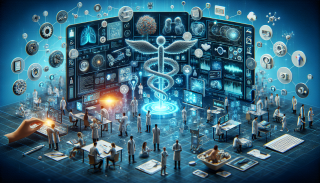
Revolutionizing Patient Care with Artificial Intelligence
Artificial Intelligence (AI) is dramatically transforming patient care, offering unprecedented advancements in diagnosis, treatment, and personalized medicine. By leveraging AI algorithms, healthcare providers can analyze vast amounts of medical data swiftly and accurately, leading to more precise diagnoses and tailored treatment plans. This technological evolution is not only enhancing the efficiency of healthcare systems but also significantly improving patient outcomes.
AI-powered tools are revolutionizing diagnostic processes. Machine learning models can scrutinize medical images, such as X-rays and MRIs, with remarkable accuracy, often surpassing human capabilities. These tools can detect anomalies and early signs of diseases, enabling timely interventions and better prognoses. Furthermore, AI systems can continuously learn and improve from new data, ensuring that diagnostic accuracy keeps advancing.
In treatment planning, AI is proving to be a game-changer. By analyzing patient histories, genetic information, and current health data, AI can recommend personalized treatment regimens. This approach ensures that patients receive the most effective therapies, minimizing adverse effects and enhancing recovery rates. Additionally, AI can predict potential complications and suggest preventive measures, further optimizing patient care.
AI’s role in personalized medicine is particularly noteworthy. By integrating data from various sources, including electronic health records (EHRs), wearable devices, and genomic data, AI can provide a comprehensive view of a patient’s health. This holistic perspective allows for the development of individualized treatment plans that cater to the unique needs of each patient. Personalized medicine not only improves treatment efficacy but also enhances patient satisfaction and engagement.
Moreover, AI is streamlining administrative tasks in healthcare settings. Automated systems can handle scheduling, billing, and patient follow-ups, reducing the administrative burden on healthcare professionals. This efficiency allows medical staff to focus more on patient care, improving the overall quality of service. Additionally, AI can assist in managing healthcare resources, ensuring that facilities are optimally utilized and reducing wait times for patients.
In conclusion, the integration of Artificial Intelligence in healthcare is revolutionizing patient care. From enhancing diagnostic accuracy to personalizing treatment plans and streamlining administrative tasks, AI is driving significant improvements in the healthcare sector. As AI technology continues to evolve, its impact on patient care is expected to grow, paving the way for a more efficient, effective, and patient-centric healthcare system.
AI-Driven Diagnostics: A New Era in Healthcare
AI-driven diagnostics are revolutionizing healthcare by enhancing the accuracy and speed of medical assessments. Leveraging advanced algorithms, artificial intelligence can analyze vast amounts of data, identifying patterns and anomalies that might elude human practitioners. This technological advancement is not only improving diagnostic precision but also enabling early detection of diseases, which is crucial for effective treatment.
One of the significant benefits of AI in diagnostics is its ability to process and interpret complex medical images. For instance, AI systems can scrutinize X-rays, MRIs, and CT scans with remarkable precision, often surpassing human capabilities. This proficiency is particularly beneficial in detecting conditions such as cancer, where early and accurate diagnosis can significantly impact patient outcomes.
Moreover, AI-driven diagnostics are instrumental in personalized medicine. By analyzing genetic information and patient history, AI can predict individual responses to various treatments, allowing for tailored therapeutic strategies. This personalized approach not only enhances treatment efficacy but also minimizes adverse effects, leading to better patient care.
Another critical application of AI in diagnostics is in the realm of predictive analytics. AI can forecast potential health issues by examining lifestyle data, medical records, and genetic markers. This predictive capability empowers healthcare providers to implement preventive measures, reducing the incidence of chronic diseases and improving overall public health.
Furthermore, AI-driven diagnostics facilitate remote healthcare services. Telemedicine platforms integrated with AI can offer preliminary diagnoses and recommendations, making healthcare more accessible, especially in underserved regions. This accessibility ensures that more individuals receive timely medical attention, thereby improving health outcomes on a broader scale.
In conclusion, AI-driven diagnostics are ushering in a new era in healthcare. By enhancing diagnostic accuracy, enabling personalized medicine, and supporting predictive analytics, AI is transforming the way medical professionals approach patient care. As this technology continues to evolve, its integration into healthcare systems promises to deliver even more significant benefits, ultimately leading to improved health and well-being for all.
How Machine Learning is Enhancing Medical Research
Machine learning is revolutionizing medical research by providing unprecedented insights and accelerating discoveries. This transformative technology leverages vast datasets to identify patterns and predict outcomes, significantly enhancing the efficiency and accuracy of research processes.
One of the primary applications of machine learning in medical research is in the analysis of complex biological data. By employing sophisticated algorithms, researchers can decode genetic information, leading to breakthroughs in personalized medicine. This enables the development of tailored treatments based on an individual’s genetic makeup, improving patient outcomes and reducing adverse effects.
Moreover, machine learning algorithms are instrumental in drug discovery. Traditional methods of drug development are time-consuming and costly. However, machine learning can rapidly analyze chemical compounds and predict their efficacy, drastically shortening the development cycle and reducing costs. This not only accelerates the introduction of new medications but also enhances their safety and effectiveness.
In addition, machine learning aids in the early detection and diagnosis of diseases. By analyzing medical images and patient records, these algorithms can identify early signs of conditions such as cancer, cardiovascular diseases, and neurological disorders. Early detection is crucial for effective treatment, and machine learning provides a powerful tool for clinicians to diagnose diseases at their nascent stages.
Furthermore, machine learning facilitates the integration of diverse data sources, such as electronic health records, clinical trials, and real-world evidence. This holistic approach enables researchers to gain a comprehensive understanding of diseases and treatment responses. By synthesizing data from various sources, machine learning models can uncover hidden correlations and generate actionable insights, driving forward medical research.
Another significant contribution of machine learning is in the optimization of clinical trials. By predicting patient responses and identifying suitable candidates, machine learning enhances the design and execution of trials. This leads to more efficient studies, faster results, and ultimately, quicker access to new therapies for patients.
In summary, machine learning is a game-changer in medical research. Its ability to analyze vast amounts of data, predict outcomes, and uncover hidden patterns is transforming the landscape of healthcare. By enhancing the precision and speed of research, machine learning is paving the way for innovative treatments and improved patient care.
The Role of AI in Personalized Medicine
Artificial Intelligence (AI) is revolutionizing personalized medicine by tailoring healthcare to individual needs. This transformation leverages vast datasets and sophisticated algorithms to provide customized treatment plans. AI’s role in personalized medicine is multifaceted, encompassing diagnosis, treatment, and patient management.
AI algorithms analyze genetic information, lifestyle data, and medical history to predict disease risk and recommend preventive measures. This predictive capability enables early intervention, potentially reducing the incidence of chronic illnesses. Moreover, AI-driven tools can identify the most effective treatments based on a patient’s unique genetic makeup, enhancing therapeutic outcomes.
In oncology, AI assists in identifying specific cancer mutations, allowing for targeted therapies that improve survival rates. By analyzing tumor genetics, AI can suggest personalized treatment regimens, minimizing adverse effects and maximizing efficacy. This precision medicine approach is transforming cancer care, offering hope for better prognoses.
AI also plays a crucial role in drug development. Machine learning models can predict how patients will respond to new medications, accelerating the development of personalized drugs. This not only shortens the time to market but also ensures that treatments are tailored to individual genetic profiles, increasing their effectiveness.
Furthermore, AI enhances patient management by monitoring health data in real-time. Wearable devices and mobile apps collect continuous health metrics, which AI systems analyze to provide personalized health recommendations. This proactive approach helps in managing chronic conditions and maintaining overall well-being.
AI’s integration into personalized medicine is not without challenges. Data privacy and security are paramount, as sensitive health information must be protected. Additionally, the complexity of AI algorithms requires transparency to ensure trust and acceptance among healthcare providers and patients.
Despite these challenges, the potential benefits of AI in personalized medicine are immense. By offering tailored healthcare solutions, AI is paving the way for a future where treatments are more effective, preventive measures are more accurate, and patient outcomes are significantly improved.
Improving Healthcare Efficiency through AI Technologies
Artificial Intelligence (AI) technologies are revolutionizing the healthcare sector by enhancing efficiency and streamlining operations. These advanced systems are capable of analyzing vast amounts of data swiftly, leading to more accurate diagnoses and personalized treatment plans. By integrating AI into healthcare, medical professionals can focus more on patient care rather than administrative tasks.
One of the primary benefits of AI in healthcare is its ability to process and interpret complex medical data. Machine learning algorithms can identify patterns and anomalies in patient records, which aids in early detection of diseases. This proactive approach not only improves patient outcomes but also reduces the overall cost of treatment.
Moreover, AI-driven tools are transforming the way medical imaging is conducted. Technologies such as deep learning can enhance the clarity of images, making it easier for radiologists to detect issues that might be missed by the human eye. This leads to quicker and more accurate diagnoses, ultimately saving lives.
Another significant advantage of AI in healthcare is its role in predictive analytics. By analyzing historical data, AI can forecast potential health risks and suggest preventive measures. This predictive capability is particularly beneficial in managing chronic diseases, where early intervention can significantly improve the quality of life for patients.
AI technologies also play a crucial role in optimizing hospital operations. From managing patient flow to scheduling surgeries, AI can streamline various processes, ensuring that resources are used efficiently. This not only enhances the patient experience but also reduces the burden on healthcare staff.
Furthermore, AI-powered chatbots and virtual assistants are becoming increasingly popular in healthcare settings. These tools can handle routine inquiries, provide medical information, and even assist in triaging patients. By automating these tasks, healthcare providers can allocate more time to critical patient care activities.
In addition, AI is instrumental in drug discovery and development. By analyzing biological data, AI can identify potential drug candidates faster than traditional methods. This accelerates the development process, bringing new treatments to market more quickly and efficiently.
Overall, the integration of AI technologies in healthcare is a game-changer. It enhances efficiency, improves patient outcomes, and reduces costs. As AI continues to evolve, its impact on the healthcare industry will only grow, paving the way for a more efficient and effective healthcare system.
AI Innovations in Predictive Healthcare Analytics
Artificial Intelligence (AI) is revolutionizing predictive healthcare analytics, offering unprecedented capabilities in forecasting patient outcomes and enhancing clinical decision-making. By leveraging vast datasets, AI algorithms can identify patterns and predict potential health issues before they manifest, enabling proactive interventions. This transformative approach not only improves patient care but also optimizes resource allocation within healthcare systems.
One of the primary applications of AI in predictive healthcare analytics is in the early detection of diseases. Machine learning models analyze patient data, including medical history, genetic information, and lifestyle factors, to predict the likelihood of conditions such as diabetes, cardiovascular diseases, and cancer. These predictions allow for early interventions, significantly improving patient prognosis and reducing treatment costs.
Moreover, AI-driven predictive analytics enhances personalized medicine. By analyzing individual patient data, AI can recommend tailored treatment plans that are more effective and have fewer side effects. This personalized approach ensures that patients receive the most appropriate care based on their unique health profiles, leading to better outcomes and higher patient satisfaction.
Another significant benefit of AI in predictive healthcare analytics is its ability to optimize hospital operations. Predictive models can forecast patient admission rates, enabling hospitals to manage their resources more efficiently. This includes optimizing staff schedules, ensuring the availability of necessary medical supplies, and reducing patient wait times. As a result, healthcare facilities can provide more efficient and effective care.
AI also plays a crucial role in predicting and managing epidemics. By analyzing data from various sources, including social media, travel patterns, and historical health records, AI can identify potential outbreaks and predict their spread. This information is invaluable for public health officials, allowing them to implement timely measures to contain the spread of infectious diseases and protect public health.
Furthermore, AI-powered predictive analytics can enhance chronic disease management. For patients with chronic conditions, continuous monitoring and timely interventions are crucial. AI algorithms can analyze real-time data from wearable devices and other health monitoring tools to predict potential complications and alert healthcare providers. This proactive approach helps in managing chronic diseases more effectively, improving patients’ quality of life.
In conclusion, AI innovations in predictive healthcare analytics are transforming the healthcare landscape. By enabling early disease detection, personalized treatment plans, optimized hospital operations, epidemic management, and improved chronic disease management, AI is paving the way for a more efficient and effective healthcare system. As AI technology continues to evolve, its impact on predictive healthcare analytics will undoubtedly grow, offering even more advanced solutions for improving patient care and outcomes.
The Future of Surgery: Robotics and AI Integration
The integration of robotics and artificial intelligence (AI) in surgery is revolutionizing the healthcare landscape. This technological synergy enhances precision, reduces human error, and improves patient outcomes. Robotics and AI are transforming traditional surgical procedures, making them less invasive and more efficient.
Robotic systems, equipped with AI algorithms, offer unparalleled accuracy. These systems can perform complex tasks with minimal invasiveness, leading to quicker recovery times and reduced postoperative complications. Surgeons can now rely on robotic assistance for intricate procedures, ensuring higher success rates and patient safety.
AI-driven analytics play a crucial role in preoperative planning. By analyzing vast amounts of medical data, AI can predict potential complications and suggest optimal surgical approaches. This data-driven insight allows surgeons to tailor procedures to individual patient needs, enhancing the overall effectiveness of surgical interventions.
Moreover, AI-powered robots are capable of real-time decision-making during surgery. These intelligent systems can adapt to unexpected changes, providing surgeons with critical support. This adaptability ensures that surgeries proceed smoothly, even in the face of unforeseen challenges.
The integration of robotics and AI also extends to postoperative care. AI algorithms can monitor patient recovery, identifying any deviations from the expected healing process. This continuous monitoring enables timely interventions, preventing complications and promoting faster recovery.
In addition, the use of AI in surgical training is transforming the education of future surgeons. Virtual reality (VR) simulations, powered by AI, provide immersive training experiences. These simulations allow trainees to practice complex procedures in a risk-free environment, honing their skills and building confidence.
Overall, the fusion of robotics and AI in surgery is a game-changer. It enhances precision, improves patient outcomes, and revolutionizes surgical training. As technology continues to advance, the future of surgery looks promising, with robotics and AI at the forefront of this transformation.