
The Evolution of Machine Vision: A Historical Perspective
The journey of machine vision technology has been marked by significant milestones, each contributing to the enhancement of visual recognition capabilities. Initially, machine vision systems were rudimentary, relying heavily on basic image processing techniques. These early systems were limited in their ability to interpret complex visual data, often constrained by the computational power available at the time.
In the 1980s, the advent of more sophisticated algorithms and the introduction of digital image sensors marked a pivotal shift. These advancements allowed for more accurate image capture and processing, laying the groundwork for more complex applications. The integration of artificial intelligence (AI) and machine learning (ML) in the 1990s further revolutionized the field, enabling systems to learn from data and improve their performance over time.
The 21st century has seen exponential growth in machine vision technology, driven by rapid advancements in hardware and software. High-resolution cameras, faster processors, and advanced neural networks have significantly enhanced the precision and speed of visual recognition systems. These improvements have expanded the applications of machine vision across various industries, from manufacturing and healthcare to autonomous vehicles and security.
Today, machine vision systems are capable of performing intricate tasks such as object detection, facial recognition, and real-time video analysis with remarkable accuracy. The integration of deep learning techniques has further pushed the boundaries, allowing for the development of systems that can understand and interpret complex scenes in a manner akin to human vision.
As technology continues to evolve, the future of machine vision holds immense potential. Emerging trends such as edge computing and the Internet of Things (IoT) are poised to further enhance the capabilities of visual recognition systems. These innovations promise to deliver even greater efficiency, accuracy, and versatility, paving the way for new and exciting applications in the years to come.
Key Innovations Driving Modern Visual Recognition Systems
Modern visual recognition systems have undergone significant advancements, driven by key innovations that enhance their accuracy and efficiency. These innovations are pivotal in transforming how machines interpret and understand visual data, leading to improved performance in various applications.
- Deep Learning Algorithms: The advent of deep learning has revolutionized visual recognition. Convolutional Neural Networks (CNNs) and Recurrent Neural Networks (RNNs) enable machines to learn from vast datasets, improving their ability to recognize patterns and objects with high precision.
- Transfer Learning: This technique allows models to leverage pre-trained networks on large datasets, reducing the need for extensive training. By fine-tuning these models for specific tasks, visual recognition systems achieve remarkable accuracy with less computational effort.
- Data Augmentation: Enhancing training datasets through techniques like rotation, scaling, and flipping helps models generalize better. This leads to more robust visual recognition systems capable of handling diverse real-world scenarios.
- Generative Adversarial Networks (GANs): GANs generate synthetic data that closely resembles real-world images. This synthetic data is invaluable for training visual recognition systems, especially when real data is scarce or expensive to obtain.
- Edge Computing: Processing data closer to the source reduces latency and bandwidth usage. Edge computing enables real-time visual recognition, which is crucial for applications like autonomous vehicles and smart surveillance systems.
- Attention Mechanisms: These mechanisms allow models to focus on the most relevant parts of an image, improving their ability to identify and classify objects accurately. Attention mechanisms are particularly useful in complex scenes with multiple objects.
- 3D Vision: Integrating depth information with traditional 2D images enhances the understanding of spatial relationships. 3D vision is essential for applications like robotics and augmented reality, where depth perception is critical.
- Self-Supervised Learning: This approach reduces the dependency on labeled data by allowing models to learn from the inherent structure of the data itself. Self-supervised learning is a promising avenue for scaling visual recognition systems.
- Explainable AI (XAI): As visual recognition systems become more complex, understanding their decision-making process is crucial. XAI techniques provide insights into how models arrive at their conclusions, ensuring transparency and trustworthiness.
- Federated Learning: This decentralized approach enables models to learn from data distributed across multiple devices without compromising privacy. Federated learning is particularly relevant for applications involving sensitive data, such as healthcare and finance.
These innovations collectively drive the evolution of modern visual recognition systems, making them more accurate, efficient, and versatile. As technology continues to advance, these systems will play an increasingly vital role in various industries, from healthcare to autonomous driving, enhancing their capabilities and expanding their applications.
How Machine Learning Algorithms Enhance Image Processing
Machine learning algorithms have revolutionized image processing, significantly enhancing the capabilities of machine vision technology. These algorithms enable systems to analyze and interpret visual data with unprecedented accuracy and efficiency. By leveraging advanced techniques such as deep learning and neural networks, machine learning models can identify patterns, detect objects, and classify images with remarkable precision.
One of the key advantages of machine learning in image processing is its ability to learn from vast amounts of data. This learning process allows algorithms to improve their performance over time, adapting to new visual information and refining their accuracy. As a result, machine vision systems can handle complex tasks such as facial recognition, object detection, and image segmentation with greater reliability.
Moreover, machine learning algorithms excel in feature extraction, a critical aspect of image processing. By automatically identifying and extracting relevant features from images, these algorithms reduce the need for manual intervention and streamline the processing workflow. This capability is particularly beneficial in applications like medical imaging, where precise feature extraction is essential for accurate diagnosis and treatment planning.
Another significant benefit of machine learning in image processing is its robustness to variations in visual data. Traditional image processing techniques often struggle with changes in lighting, orientation, and scale. In contrast, machine learning models can generalize across different conditions, ensuring consistent performance even in challenging environments. This adaptability makes machine vision systems more versatile and reliable in real-world applications.
Furthermore, the integration of machine learning with image processing has led to the development of innovative solutions for various industries. In the automotive sector, for instance, machine vision technology powered by machine learning algorithms is used in advanced driver-assistance systems (ADAS) to enhance vehicle safety and autonomy. Similarly, in the retail industry, these technologies enable automated inventory management and customer behavior analysis, driving operational efficiency and personalized experiences.
In conclusion, the synergy between machine learning algorithms and image processing has significantly advanced machine vision technology. By enabling systems to learn from data, extract features, and adapt to varying conditions, these algorithms have transformed visual recognition capabilities across multiple domains. As machine learning continues to evolve, its impact on image processing and machine vision technology is expected to grow, unlocking new possibilities and applications.
Applications of Machine Vision in Various Industries
Machine vision technology has revolutionized numerous industries by enhancing visual recognition capabilities. This advancement has led to significant improvements in efficiency, accuracy, and productivity across various sectors. Below are some key applications of machine vision in different industries:
- Manufacturing: Machine vision systems are extensively used in manufacturing for quality control, inspection, and automation. These systems can detect defects, measure components, and ensure products meet stringent standards, thereby reducing waste and improving overall quality.
- Automotive: In the automotive industry, machine vision is employed for assembly line inspections, robotic guidance, and autonomous driving. It helps in identifying flaws in parts, ensuring proper assembly, and enhancing the safety and reliability of vehicles.
- Healthcare: Machine vision technology is pivotal in medical imaging, diagnostics, and surgery. It aids in the accurate analysis of medical images, early detection of diseases, and precision in surgical procedures, leading to better patient outcomes.
- Agriculture: In agriculture, machine vision is used for crop monitoring, sorting, and harvesting. It enables the identification of plant health issues, classification of produce, and automation of harvesting processes, thereby increasing yield and efficiency.
- Retail: Retailers utilize machine vision for inventory management, customer behavior analysis, and checkout automation. This technology helps in maintaining accurate stock levels, understanding consumer preferences, and streamlining the checkout process.
- Security: Machine vision plays a crucial role in surveillance, facial recognition, and access control. It enhances security by providing real-time monitoring, identifying potential threats, and ensuring authorized access to restricted areas.
- Logistics: In logistics, machine vision is used for package sorting, tracking, and warehouse automation. It improves the accuracy of sorting processes, ensures timely delivery, and optimizes warehouse operations.
- Food and Beverage: The food and beverage industry benefits from machine vision in quality assurance, packaging inspection, and contamination detection. It ensures that products are safe, properly labeled, and free from defects.
These applications demonstrate the transformative impact of machine vision technology across various industries. By leveraging advanced visual recognition capabilities, businesses can achieve higher efficiency, accuracy, and productivity, ultimately leading to enhanced operational performance and customer satisfaction.
Challenges and Solutions in Developing Advanced Vision Systems
Developing advanced vision systems presents numerous challenges, but innovative solutions are continually emerging to address these obstacles. One of the primary challenges is the need for high-quality data. Machine vision systems rely heavily on vast amounts of accurately labeled data to train algorithms. Without this, the systems struggle to achieve high levels of accuracy and reliability.
Another significant challenge is the computational power required. Advanced vision systems often need to process large volumes of data in real-time, which demands substantial processing capabilities. This can be particularly problematic for applications requiring immediate responses, such as autonomous vehicles or real-time surveillance.
Environmental variability also poses a challenge. Vision systems must operate effectively under diverse conditions, including varying lighting, weather, and physical obstructions. Ensuring consistent performance across these variables is crucial for the reliability of the system.
To address these challenges, several solutions have been developed. One approach is the use of synthetic data to supplement real-world data. This can help to overcome the limitations of data availability and improve the training process. Additionally, advancements in hardware, such as the development of specialized processors and GPUs, have significantly enhanced the computational capabilities of vision systems.
Moreover, the implementation of advanced algorithms, such as deep learning and neural networks, has improved the ability of vision systems to adapt to environmental changes. These algorithms can learn from diverse datasets and enhance the system’s robustness and accuracy.
Another solution is the integration of multi-sensor data fusion. By combining data from various sensors, such as LiDAR, radar, and cameras, vision systems can achieve a more comprehensive understanding of their environment. This multi-faceted approach helps to mitigate the limitations of individual sensors and enhances overall system performance.
In conclusion, while developing advanced vision systems involves several challenges, innovative solutions are continuously being developed. The use of synthetic data, advancements in hardware, implementation of sophisticated algorithms, and multi-sensor data fusion are all contributing to the enhancement of machine vision technology. These advancements are paving the way for more reliable and efficient visual recognition systems, driving progress in various industries.
The Role of Artificial Intelligence in Machine Vision
Artificial Intelligence (AI) has revolutionized machine vision, significantly enhancing visual recognition capabilities. By integrating AI algorithms, machine vision systems can now process and interpret visual data with unprecedented accuracy and speed. This synergy between AI and machine vision has led to remarkable advancements in various industries, from manufacturing to healthcare.
AI-driven machine vision systems utilize deep learning and neural networks to analyze images and videos. These technologies enable the systems to learn from vast datasets, improving their ability to identify patterns and anomalies. As a result, machine vision applications can now perform complex tasks such as object detection, facial recognition, and quality inspection with remarkable precision.
One of the key benefits of incorporating AI in machine vision is the ability to handle large volumes of data. Traditional vision systems often struggle with processing extensive datasets, but AI algorithms can efficiently manage and analyze this information. This capability is particularly valuable in industries like autonomous vehicles, where real-time data processing is crucial for safe and efficient operation.
Moreover, AI enhances the adaptability of machine vision systems. Unlike conventional systems that require manual reprogramming for new tasks, AI-powered systems can learn and adapt autonomously. This flexibility allows for continuous improvement and optimization, reducing downtime and increasing productivity.
In the realm of healthcare, AI-powered machine vision is transforming diagnostic procedures. Medical imaging technologies, such as MRI and CT scans, benefit from AI’s ability to detect subtle abnormalities that might be missed by human eyes. This leads to earlier and more accurate diagnoses, ultimately improving patient outcomes.
Furthermore, AI in machine vision is driving innovation in the retail sector. Retailers are leveraging AI to enhance customer experiences through personalized recommendations and automated checkout systems. By analyzing shopper behavior and preferences, AI algorithms can optimize inventory management and streamline operations.
In conclusion, the integration of Artificial Intelligence in machine vision is propelling the technology to new heights. The combination of AI’s data processing prowess and machine vision’s visual analysis capabilities is unlocking new possibilities across various industries. As AI continues to evolve, its role in machine vision will undoubtedly expand, leading to even more sophisticated and efficient visual recognition systems.
Future Trends in Machine Vision Technology
Machine vision technology is rapidly evolving, driven by advancements in artificial intelligence, deep learning, and sensor innovation. These developments are transforming visual recognition capabilities across various industries. The future trends in machine vision technology promise to enhance accuracy, efficiency, and application scope, making it a pivotal component in automation and smart systems.
One significant trend is the integration of AI and deep learning algorithms. These technologies enable machine vision systems to learn from vast datasets, improving their ability to identify and classify objects with high precision. This advancement is particularly beneficial in sectors like manufacturing, healthcare, and autonomous vehicles, where accurate visual recognition is crucial.
Another emerging trend is the use of advanced sensors and imaging technologies. High-resolution cameras, 3D imaging, and hyperspectral imaging are becoming more prevalent, providing detailed and multi-dimensional data. These sensors enhance the capability of machine vision systems to detect minute defects, measure dimensions accurately, and analyze complex scenes.
Edge computing is also gaining traction in the realm of machine vision. By processing data closer to the source, edge computing reduces latency and bandwidth usage, enabling real-time decision-making. This is especially important in applications such as robotics, where immediate responses are necessary for efficient operation.
Moreover, the adoption of machine vision in the Internet of Things (IoT) is expanding. IoT devices equipped with visual recognition capabilities can monitor environments, track objects, and ensure security. This integration facilitates the creation of smart cities, intelligent transportation systems, and automated retail solutions.
Collaborative robots, or cobots, are another area where machine vision is making a significant impact. These robots work alongside humans, using visual recognition to perform tasks with precision and safety. The synergy between cobots and machine vision technology is enhancing productivity and reducing the risk of workplace injuries.
Additionally, the development of software tools and platforms for machine vision is simplifying the deployment and customization of these systems. User-friendly interfaces and pre-trained models allow businesses to implement machine vision solutions without extensive technical expertise, democratizing access to this advanced technology.
In conclusion, the future of machine vision technology is marked by the integration of AI, advanced sensors, edge computing, IoT, and collaborative robotics. These trends are set to revolutionize visual recognition, driving innovation and efficiency across multiple domains. As machine vision continues to evolve, its applications will become increasingly diverse, paving the way for smarter, more automated systems.




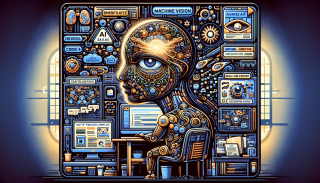

I have been working in the field of computer vision for several years now, and I must say the advancements in machine vision technology have been truly remarkable. The improvements in visual recognition have made a significant impact on various industries, from healthcare to autonomous vehicles. I am excited to see how this technology will continue to evolve and revolutionize the way we interact with machines.
As a tech enthusiast, I have been following the developments in machine vision technology closely. The progress in enhancing visual recognition capabilities is truly impressive. I can’t wait to see how this will shape the future of augmented reality and robotics. The potential applications of this technology are endless, and I am eager to see how it will be implemented in various industries.
I recently attended a conference on machine vision technology, and I was blown away by the advancements in visual recognition. The demos showcasing the accuracy and speed of object detection were truly impressive. I can see how this technology can greatly benefit sectors like security and manufacturing. I am curious to learn more about the algorithms and techniques behind these advancements.
Having worked on projects involving machine vision technology, I can attest to the importance of enhancing visual recognition capabilities. The ability of machines to accurately identify and analyze visual data is crucial for tasks like quality control and image processing. I am interested in learning more about the latest advancements in this field and how they can be applied to real-world scenarios.
I have been working in the field of computer vision for several years now, and I must say that the advancements in machine vision technology have truly revolutionized the way we perceive and interact with visual data. The enhanced visual recognition capabilities have opened up a whole new world of possibilities in various industries, from healthcare to automotive. I am excited to see how this technology will continue to evolve and shape the future.
As a tech enthusiast, I have always been fascinated by the rapid advancements in machine vision technology. The ability of machines to accurately recognize and interpret visual data is truly remarkable. I have personally witnessed the impact of this technology in improving efficiency and accuracy in various applications, such as facial recognition and autonomous vehicles. I look forward to seeing how machine vision technology will continue to transform our world.
I recently attended a conference on machine vision technology, and I was blown away by the latest developments in visual recognition. The level of precision and speed at which machines can now analyze and interpret images is truly impressive. I can see how this technology can greatly benefit industries like manufacturing and security. I would love to learn more about the specific algorithms and techniques that are driving these advancements.
Having worked remotely as a digital nomad, I have seen firsthand the impact of machine vision technology on improving remote collaboration and communication. The ability to accurately identify objects and people in real-time has made virtual meetings and presentations much more engaging and efficient. I am curious to know how machine vision technology is being integrated into virtual reality and augmented reality applications to enhance the user experience even further.