
From Pixels to Precision: How AI is Redefining Game Development
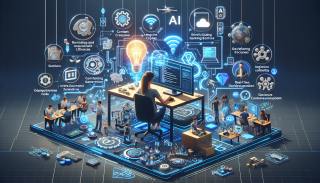
Artificial Intelligence (AI) is revolutionizing game development, transforming rudimentary pixels into intricate, lifelike experiences. This evolution is not merely a technological advancement but a paradigm shift in how games are conceptualized, designed, and executed. AI’s integration into game development has led to unprecedented levels of precision, enhancing both the creation process and the end-user experience.
AI algorithms now enable developers to generate realistic environments, characters, and scenarios with remarkable accuracy. These algorithms analyze vast amounts of data to create dynamic, responsive game worlds that adapt to player actions. This adaptability ensures a unique experience for each player, increasing engagement and replayability.
Moreover, AI-driven tools streamline the development process by automating repetitive tasks. This automation allows developers to focus on creative aspects, such as storytelling and character development, rather than getting bogged down by mundane chores. The result is a more efficient workflow and higher-quality games.
AI also plays a crucial role in enhancing game mechanics. Machine learning models can predict player behavior, allowing for the creation of more challenging and rewarding gameplay. These models can adjust difficulty levels in real-time, providing a balanced experience that keeps players hooked.
In addition, AI-powered analytics offer invaluable insights into player preferences and behaviors. These insights enable developers to fine-tune their games, ensuring they meet the expectations of their target audience. By understanding what players enjoy and what frustrates them, developers can make informed decisions that enhance overall satisfaction.
Furthermore, AI is instrumental in improving game graphics. Techniques such as procedural generation and neural networks allow for the creation of highly detailed and realistic visuals. These techniques reduce the time and resources required for manual design, making it possible to produce stunning graphics on a larger scale.
AI’s impact extends beyond development to customer support and community management. Chatbots and virtual assistants, powered by AI, provide instant support to players, resolving issues quickly and efficiently. This immediate assistance improves player satisfaction and fosters a positive gaming community.
In summary, AI is not just a tool but a transformative force in game development. From enhancing graphics and gameplay to streamlining processes and providing valuable insights, AI is redefining the gaming landscape. As technology continues to evolve, the role of AI in game development will only become more significant, paving the way for even more immersive and engaging gaming experiences.
The Rise of Intelligent NPCs: AI’s Role in Creating Immersive Worlds
The gaming industry has witnessed a transformative shift with the advent of intelligent NPCs (Non-Player Characters), driven by advanced AI technologies. These AI-powered characters have revolutionized the way players interact with virtual worlds, creating more immersive and dynamic gaming experiences. By leveraging sophisticated algorithms and machine learning, developers can now design NPCs that exhibit lifelike behaviors, making game environments more engaging and realistic.
Intelligent NPCs enhance gameplay by adapting to player actions, offering personalized interactions, and contributing to the narrative depth of the game. Unlike traditional NPCs, which follow pre-defined scripts, AI-driven characters can make autonomous decisions, react to changing scenarios, and even learn from player behavior. This adaptability not only enriches the gaming experience but also ensures that each playthrough feels unique.
Moreover, the integration of AI in NPC development has enabled the creation of more complex and believable characters. These NPCs can exhibit a wide range of emotions, respond to environmental stimuli, and engage in meaningful conversations with players. This level of sophistication adds a new layer of immersion, making players feel more connected to the game world and its inhabitants.
Several key factors contribute to the rise of intelligent NPCs in gaming:
- Advanced AI Algorithms: The use of cutting-edge algorithms allows NPCs to process vast amounts of data and make informed decisions in real-time.
- Machine Learning: By employing machine learning techniques, NPCs can learn from player interactions and improve their behavior over time.
- Natural Language Processing (NLP): NLP enables NPCs to understand and respond to player inputs more naturally, facilitating more engaging dialogues.
- Behavioral Modeling: Developers can create NPCs with complex behavioral patterns, making them more unpredictable and lifelike.
The impact of intelligent NPCs extends beyond gameplay. They also play a crucial role in enhancing the storytelling aspect of games. By interacting with these AI-driven characters, players can uncover deeper narratives, explore intricate plotlines, and experience a more cohesive and compelling story. This narrative depth is essential for creating memorable gaming experiences that resonate with players long after they have finished the game.
In conclusion, the rise of intelligent NPCs, powered by advanced AI technologies, has significantly elevated the gaming industry. These AI-driven characters offer more immersive, dynamic, and personalized experiences, transforming the way players engage with virtual worlds. As AI continues to evolve, the potential for creating even more sophisticated and lifelike NPCs will only grow, promising an exciting future for the gaming industry.
Adaptive Gameplay: How AI Personalizes Player Experiences
Adaptive gameplay, driven by artificial intelligence, is revolutionizing the gaming industry by tailoring player experiences to individual preferences and skill levels. This dynamic approach ensures that each player encounters a unique and engaging journey, enhancing overall satisfaction and retention.
AI algorithms analyze player behavior, including decision-making patterns, reaction times, and in-game choices. By processing this data, the system can adjust various game elements such as difficulty, storyline progression, and character interactions. This personalization not only keeps players engaged but also provides a more immersive and rewarding experience.
One of the key benefits of adaptive gameplay is its ability to cater to a diverse audience. Whether a novice or a seasoned gamer, the AI can modify challenges to match the player’s proficiency, ensuring that the game remains enjoyable and stimulating. This inclusivity broadens the appeal of games, attracting a wider demographic and fostering a more inclusive gaming community.
Moreover, adaptive gameplay enhances replayability. By offering different experiences based on player choices and performance, games encourage multiple playthroughs. This variability keeps the content fresh and exciting, motivating players to explore alternative paths and outcomes.
In addition to enhancing player engagement, adaptive gameplay also provides valuable insights for developers. By understanding how players interact with the game, developers can identify areas for improvement and innovation. This feedback loop helps in creating more refined and captivating games, ultimately driving the industry’s growth.
In conclusion, AI-powered adaptive gameplay is a game-changer in the gaming industry. By personalizing experiences, it not only enhances player satisfaction but also contributes to the development of more inclusive and engaging games. As technology continues to evolve, the potential for even more sophisticated and immersive adaptive gameplay experiences is boundless.
AI-Driven Graphics: Enhancing Visual Realism in Modern Games
In the ever-evolving gaming industry, AI-driven graphics have revolutionized visual realism, creating immersive experiences for players. By leveraging advanced algorithms, game developers can generate lifelike environments, characters, and animations that captivate audiences. This transformation is not just about enhancing aesthetics but also about improving gameplay dynamics and user engagement.
AI technology enables the creation of highly detailed textures and realistic lighting effects, which are crucial for achieving visual fidelity. Machine learning models analyze vast datasets to understand how light interacts with different surfaces, resulting in more accurate and dynamic lighting. This level of detail enhances the overall atmosphere, making virtual worlds feel more authentic.
Moreover, AI-driven graphics contribute to more realistic character animations. Traditional animation techniques often fall short in capturing the subtleties of human movement. However, AI algorithms can analyze motion capture data to produce fluid and natural animations. This advancement not only improves the visual appeal but also adds depth to character interactions, making them more believable.
Another significant impact of AI in graphics is procedural content generation. This technique allows for the automatic creation of vast and diverse game environments. By using AI, developers can generate unique landscapes, buildings, and objects, reducing the time and effort required for manual design. This not only speeds up the development process but also ensures that each player’s experience is distinct.
Furthermore, AI-driven graphics enhance the realism of in-game physics. Simulating real-world physics in a virtual environment is a complex task, but AI can model these interactions with high precision. This results in more accurate collision detection, fluid dynamics, and object behavior, contributing to a more immersive gaming experience.
In conclusion, the integration of AI in graphics has significantly elevated the visual realism in modern games. By utilizing advanced algorithms, developers can create lifelike environments, characters, and animations that enhance player engagement. As AI technology continues to evolve, the future of gaming promises even more breathtaking and immersive experiences.
Revolutionizing Game Testing: The Efficiency of AI Algorithms
Artificial Intelligence (AI) is transforming the gaming industry, particularly in the realm of game testing. The integration of AI algorithms has significantly enhanced the efficiency and accuracy of testing processes, ensuring a seamless gaming experience for users. This advancement not only accelerates the development cycle but also reduces costs and human error.
AI-driven game testing employs sophisticated algorithms to simulate a wide range of scenarios, identifying bugs and glitches that might be overlooked by human testers. These algorithms can run thousands of tests in a fraction of the time it would take a human, providing comprehensive coverage and ensuring that games are thoroughly vetted before release.
One of the key benefits of AI in game testing is its ability to learn and adapt. Machine learning models can analyze previous test results and improve their testing strategies over time. This continuous learning process enables AI to predict potential issues and address them proactively, enhancing the overall quality of the game.
Moreover, AI algorithms can handle repetitive tasks with precision, freeing up human testers to focus on more complex and creative aspects of game development. This collaboration between AI and human intelligence leads to a more efficient and effective testing process, ultimately resulting in higher-quality games.
Another significant advantage is the scalability of AI-driven testing. As games become more complex and expansive, the need for extensive testing grows. AI can easily scale to meet these demands, ensuring that even the most intricate games are thoroughly tested. This scalability is particularly beneficial for large-scale multiplayer games, where the potential for bugs and glitches is higher.
In addition to improving efficiency, AI algorithms also enhance the accuracy of game testing. By analyzing vast amounts of data, AI can identify patterns and anomalies that might be missed by human testers. This data-driven approach ensures that even the smallest issues are detected and resolved, leading to a smoother and more enjoyable gaming experience for players.
Furthermore, AI-driven testing can provide valuable insights into player behavior and preferences. By analyzing in-game data, AI can identify trends and patterns that can inform future game development. This feedback loop helps developers create games that are more engaging and tailored to the preferences of their audience.
In conclusion, the integration of AI algorithms in game testing is revolutionizing the gaming industry. By enhancing efficiency, accuracy, and scalability, AI is ensuring that games are of the highest quality and providing a better experience for players. As AI technology continues to evolve, its impact on game testing and development will only grow, paving the way for even more innovative and immersive gaming experiences.
The Future of Esports: AI’s Impact on Competitive Gaming
The integration of artificial intelligence (AI) in esports is revolutionizing competitive gaming, creating a dynamic and immersive experience for players and spectators alike. AI’s impact on esports is multifaceted, enhancing gameplay, strategy development, and audience engagement.
AI-driven analytics provide players with in-depth insights into their performance, enabling them to refine their strategies and improve their skills. These analytics tools analyze vast amounts of data, identifying patterns and trends that human players might overlook. This data-driven approach allows for more informed decision-making, leading to more competitive and exciting matches.
Moreover, AI is transforming the way games are designed and balanced. Game developers use AI algorithms to test and optimize game mechanics, ensuring a fair and engaging experience for all players. This results in games that are not only more enjoyable but also more challenging, pushing players to their limits and fostering a higher level of competition.
AI also plays a crucial role in enhancing audience engagement. Advanced AI algorithms can predict match outcomes, provide real-time statistics, and generate personalized content for viewers. This creates a more interactive and engaging viewing experience, attracting a larger and more diverse audience to esports events.
Additionally, AI-powered bots are being used to train players, offering a consistent and challenging practice environment. These bots can adapt to a player’s skill level, providing tailored training sessions that help players improve more efficiently. This not only benefits professional players but also helps aspiring gamers reach their full potential.
In summary, AI is a game-changer in the world of esports, driving innovation and enhancing the overall experience for players and fans. As AI technology continues to evolve, its impact on competitive gaming will only grow, shaping the future of esports in unprecedented ways.
Ethical Considerations: Balancing AI Innovation and Player Privacy
The integration of artificial intelligence (AI) in the gaming industry has revolutionized player experiences, offering unprecedented levels of immersion and interactivity. However, this innovation brings forth significant ethical considerations, particularly in balancing AI advancements with player privacy. As AI systems become more sophisticated, they collect and analyze vast amounts of player data to enhance gameplay, personalize experiences, and improve game mechanics. This data collection, while beneficial, raises concerns about how player information is used, stored, and protected.
Ensuring player privacy while leveraging AI technology requires a delicate balance. Game developers must implement robust data protection measures to safeguard sensitive information. This includes employing encryption techniques, anonymizing data, and adhering to stringent data privacy regulations. Transparency is also crucial; players should be informed about what data is being collected, how it is used, and the measures in place to protect it.
Moreover, ethical AI usage in gaming involves addressing potential biases in AI algorithms. These biases can affect gameplay and player experiences, leading to unfair advantages or disadvantages. Developers must regularly audit and refine AI systems to ensure fairness and inclusivity. Additionally, providing players with options to control their data and AI interactions can empower them and build trust in the gaming community.
In summary, the ethical considerations surrounding AI in gaming are multifaceted. Balancing innovation with privacy requires a commitment to data protection, transparency, and fairness. By addressing these concerns, the gaming industry can continue to innovate while respecting player rights and fostering a trustworthy environment.



As a long-time gamer, I’ve seen the incredible evolution of AI in the gaming industry. From simple NPCs to complex, adaptive AI that can learn and adapt to player behavior, it’s truly a game changer. I’m excited to see how AI will continue to shape the future of gaming.
I’ve always been fascinated by the intersection of technology and gaming. The advancements in AI have completely transformed the gaming experience, making it more immersive and challenging. It’s amazing to see how far we’ve come and I can’t wait to see what the future holds.
AI in gaming has come a long way since the early days. The ability of AI to adapt and provide unique experiences for players is truly remarkable. It’s like playing against a real human opponent, which adds a whole new level of excitement to gaming. The future of AI in gaming is bright!
I remember when AI in games was just basic scripts following set patterns. Now, AI can analyze player behavior and adjust its strategies accordingly. It’s like playing against a real person, which adds a whole new level of challenge and excitement. The evolution of AI in gaming is truly impressive.
I have been a gamer for years and have seen the incredible evolution of AI in the gaming industry. It’s amazing how far we’ve come from basic NPCs to complex, intelligent characters that can adapt to player actions. I’m excited to see how AI will continue to revolutionize gaming in the future.
As a hardcore gamer, I’ve witnessed firsthand the impact of AI on gameplay. From enhancing enemy behavior to creating immersive worlds, AI has truly been a game changer. I’m curious to know more about the specific AI technologies being used in the gaming industry and how they are shaping the future of gaming.
I remember when AI in games used to be predictable and repetitive. Now, with advancements in technology, AI has become more sophisticated and realistic. It’s fascinating to see how AI can learn and adapt to player strategies, making each gaming experience unique. I wonder what ethical considerations are being taken into account as AI continues to evolve in gaming.
AI has definitely changed the way we play games. It’s incredible to see how AI algorithms can analyze player behavior and adjust game difficulty accordingly. I’m interested in learning more about the role of AI in game development and how it is influencing the design process. Can AI truly revolutionize the gaming industry or are there limitations to its capabilities?
The evolution of AI in gaming has been a game changer for both developers and players. AI-powered features like dynamic difficulty adjustment and personalized gaming experiences have transformed the industry. I’m curious to know how AI is being used to enhance storytelling in games and create more immersive narratives. The possibilities seem endless with AI in gaming.